How to Honor Imbolc: February 1-2
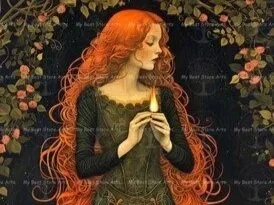
Image Source
Beginning on February 1st at sundown and continuing into February 2nd, the Celtic cross-quarter holy day of Imbolc is honored. This ancient festival marks the subtle yet powerful turning of the wheel of the year—the moment when winter’s stillness begins to loosen its grip and the very first stirrings of spring awaken beneath the surface.
Imbolc is a celebration of incipient life. Even if the earth is still frozen where you live, even if snow covers the ground and the air bites with cold, something is undeniably shifting. The light is returning. The days are growing longer. Deep in the soil, seeds are beginning to respond. And within us, too, something quietly starts to rise.
The First Breath of Spring
After months of turning inward—of hibernation, rest, and reflection—life begins to stir again. In some places, the earliest spring flowers bravely push their way through the soil. In others, the signs are more subtle: a change in the quality of light, a restlessness in the body, a longing to move, to create, to clear space.
Spiritually, Imbolc represents new life coming into manifestation. We may only see the tiniest hints above the surface, but much is happening in the darkness. Like nature, we are reawakening—carrying new dreams, ideas, and possibilities that were quietly gestating through winter.
As those first green shoots emerge, they naturally inspire a desire to clear away what is dead or no longer serving. Old leaves are composted. Garden beds are prepared. And inwardly, we feel a similar call: to cleanse, to simplify, to make room.
Honoring the Goddess Brigid
Imbolc is traditionally associated with Brigid, the beloved Celtic goddess of fire, healing, poetry, inspiration, and childbirth. Brigid is often honored as a triple goddess, embodying feminine archetypes of the maiden, the mother, and the crone—three sacred aspects of womanhood and life’s cyclical nature.
She is a goddess of protection and creativity, a keeper of the sacred flame, and a midwife to new beginnings. Her energy of fire is life-giving: the hearth fire that warms the home, the creative spark that ignites poetry and art, the inner flame that gives us courage to begin again.
At Imbolc, Brigid helps light the fire that welcomes spring—both on the land and within our own spirits.
A Time of Cleansing and Transition
Imbolc brings a final spiritual cleansing. The long descent of winter helped us identify what we are ready to release: habits, patterns, beliefs, or dreams that have run their course. Now comes the moment of letting go for real—clearing the ground so something new can grow.
This is often a time of transition and change. While we may speak about growth with excitement, real change can feel uncomfortable. We are creatures of habit. Familiarity feels safe. But Imbolc reminds us that growth requires movement—an openness to stepping beyond what we know.
Just as nature risks new life while frost may still come, we, too, are invited to take gentle but courageous steps forward.
Questions to Contemplate at Imbolc
Do I have the inner strength to make real, lasting change?
Can I leave what is safe, comfortable, and familiar in order to grow more fully into myself?
What winter dreams do I wish to bring with me into spring?
What fiery creativity or passion is beginning to stir within me?
What am I ready to bring forth into the world?
You might sit with one or two of these questions in meditation, journaling, or quiet reflection over the days of Imbolc.
A Meaningful Imbolc Ritual
This simple ritual honors Imbolc as a celebration of renewal, light, and the first stirrings of spring. Adapt it in any way that feels authentic to you.
Preparations
Choose a quiet, clean space and set up a small altar
Gather:
White or green candles
Seeds for planting
Soil and pot or egg carton for planting the seeds
A small bowl of water
Fresh flowers or early spring greenery (if available)
Optional: symbols of Brigid or Celtic-inspired items
Ritual Structure
1. Cleansing and Preparation
Take a few moments to center yourself. Light a white candle to symbolize the returning light. Gently sprinkle water around your space for purification, inviting clarity and renewal.
2. Invocation and Intention Setting
Speak aloud or silently:
“As the wheel of the year turns, I welcome the first whispers of spring. May new beginnings take root, may creativity bloom, and may hope emerge like tender green shoots.”
3. Seed Planting Meditation
Hold your seeds in your hands. Visualize your hopes, dreams, or intentions for the coming season. Slowly plant the seeds, allowing each one to represent something you are ready to nurture into being.
4. Blessing and Gratitude
Light a second candle. Offer gratitude—to the earth, to Brigid, or to the spiritual forces you work with. Reflect on renewal, potential, and the quiet promise of growth.
5. Closing
Extinguish the candles mindfully. Sit in silence for a few moments. In the coming weeks, water your seeds with care, letting their growth remind you of your own unfolding.
Imbolc teaches us that even when the world still looks dormant, life is already stirring. By honoring this threshold moment—between winter and spring—we align ourselves with nature’s rhythm and remember that every great blooming begins, quietly, in the dark.