Sacred Feminine Symbols of the Priestess Path
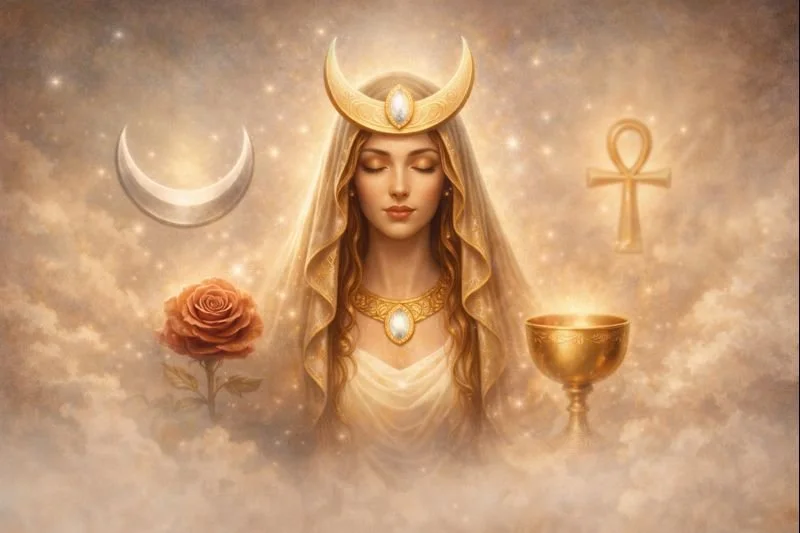
Across cultures, centuries, and sacred landscapes, from the misty hills of Glastonbury to the temples of ancient Egypt, the caves and cathedrals of France, and the ruins of ancient Greece, women on the spiritual path have been guided by symbols.
These symbols are living codes of wisdom. They whisper ancient teachings to the soul. They remind us of our connection to the cycles of nature, the mysteries of birth and death, and the eternal presence of the Divine Feminine.
On the Priestess Path, symbols become companions: mirrors reflecting our inner evolution. We are often guided to symbols and they begin showing up on our path for the spiritual lessons we are ready to receive.
Below are some of the most enduring sacred feminine symbols, woven through myth, mysticism, and lived experience.
The Crescent Moon
The crescent moon is one of the oldest feminine symbols known to humanity. It represents the cycles of life, intuition, and transformation.
Like the waxing and waning moon, a woman’s spiritual journey moves through phases of growth, release, rest, and renewal. The crescent teaches us to honor mystery, our watery nature and our feminine cycles.
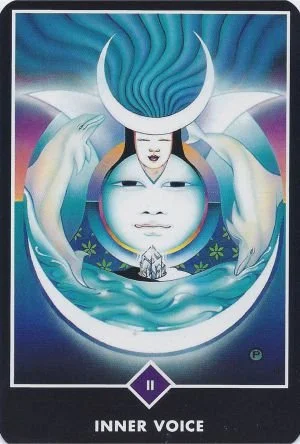
For priestesses, the moon is both guide and guardian, reminding us that darkness is the place where our subconscious, intuition and inner knowing exist.
When the crescent moon is shown with its points facing upward, like a bowl or chalice, it becomes a vessel.
It is the shape of receiving.
This form mirrors the womb, the cup, the grail, the sacred feminine as a space that holds, gathers, and contains life force. In this orientation, the moon is an energetic symbol of receptivity, intuition, and inner attunement.
There’s also a deep connection to the womb field here. The upward crescent reflects the inner architecture of the feminine body ~ curved, open, and capable of holding life, energy, and transformation. It becomes a symbol of gestation, of allowing something to grow in the unseen.
In some mystical interpretations, especially within priestess and goddess traditions, this shape is also linked to the Holy Grail. The woman herself becomes the chalice, the one who can hold divine presence.
You’ll see this echoed in depictions of goddesses like Hathor or Isis, where the horns form this same crescent shape, often cradling the sun disc. The image itself tells a story: the feminine as the one who holds the light.
The Chalice
The chalice is more formally the sacred vessel of reception. It symbolizes the womb, the heart, and the soul’s capacity to hold divine presence.
In mystical traditions, the chalice represents the Holy Grail as the awakened feminine vessel capable of receiving wisdom, love, and revelation.
To walk the Priestess Path is to become the chalice: the vessel open to receive divine guidance and wisdom, connecting Heaven and Earth, steady, and devoted to sacred service.
The Ankh
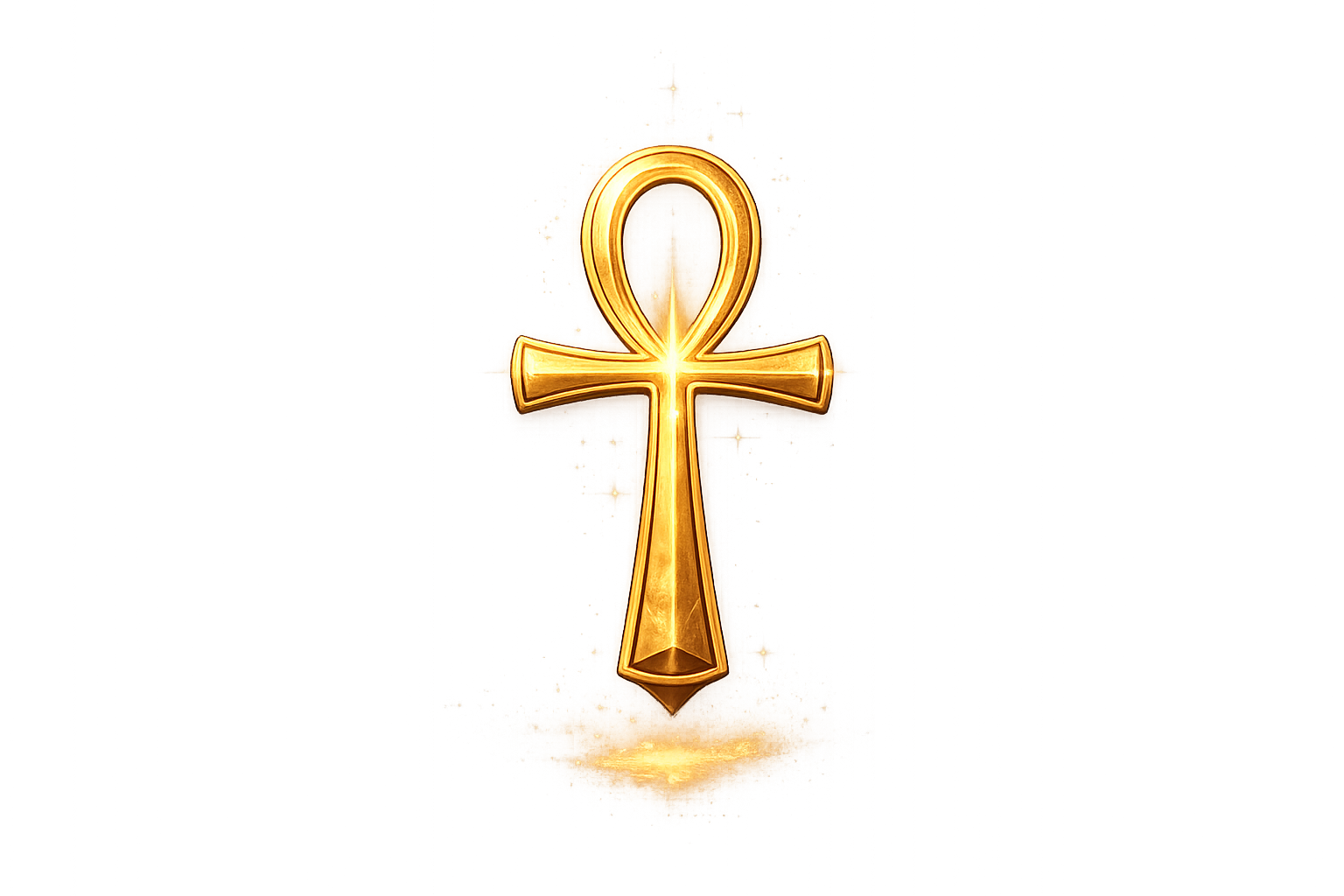
The ankh, ancient symbol of life, also bridges Heaven and Earth. Its loop represents eternal spirit; its cross, embodied existence.
Often associated with goddess traditions and temple initiations, the ankh reminds us that true spirituality honors both the physical and the spiritual.
For modern priestesses, the ankh affirms that embodiment on the 3D plane of the material world is not an obstacle to enlightenment, it is simply the path we are walking.
The ankh is often called the key of life.
It holds a union within its form, a meeting point between the eternal and the embodied.
At the top, the loop carries a distinct quality. It feels continuous, without beginning or end. Many traditions experience this as a symbol of the eternal realm—heaven, spirit, the unseen, the infinite field of consciousness. Its oval shape also mirrors the womb and the egg, forms that hold life before it takes shape. There is a sense of wholeness here, a completeness that exists beyond time.
Below, the vertical line descends.
It brings that eternal current downward, like a channel. A movement of life force entering into form. It can be felt as the axis of the body, the spine, the pathway through which energy flows into the physical experience.
The horizontal line creates the crossbar.
This is where the vertical current meets the world. It opens into extension, into relationship, into lived experience. The horizontal plane reflects the dimension of earthly life ~ interaction, embodiment, the human journey as it unfolds across time and space.
Together, these elements form a symbol of life fully lived as a bridge between realms, the literal embodiment of the Priestess.
The ankh unites Heaven and Earth within the human form.
In ancient Egyptian imagery, the ankh is often held by deities and offered to the lips or the heart. It is a symbol of transmitting the breath of life itself—into the being. A reminder that life flows through us from a greater power.
The Vesica Piscis
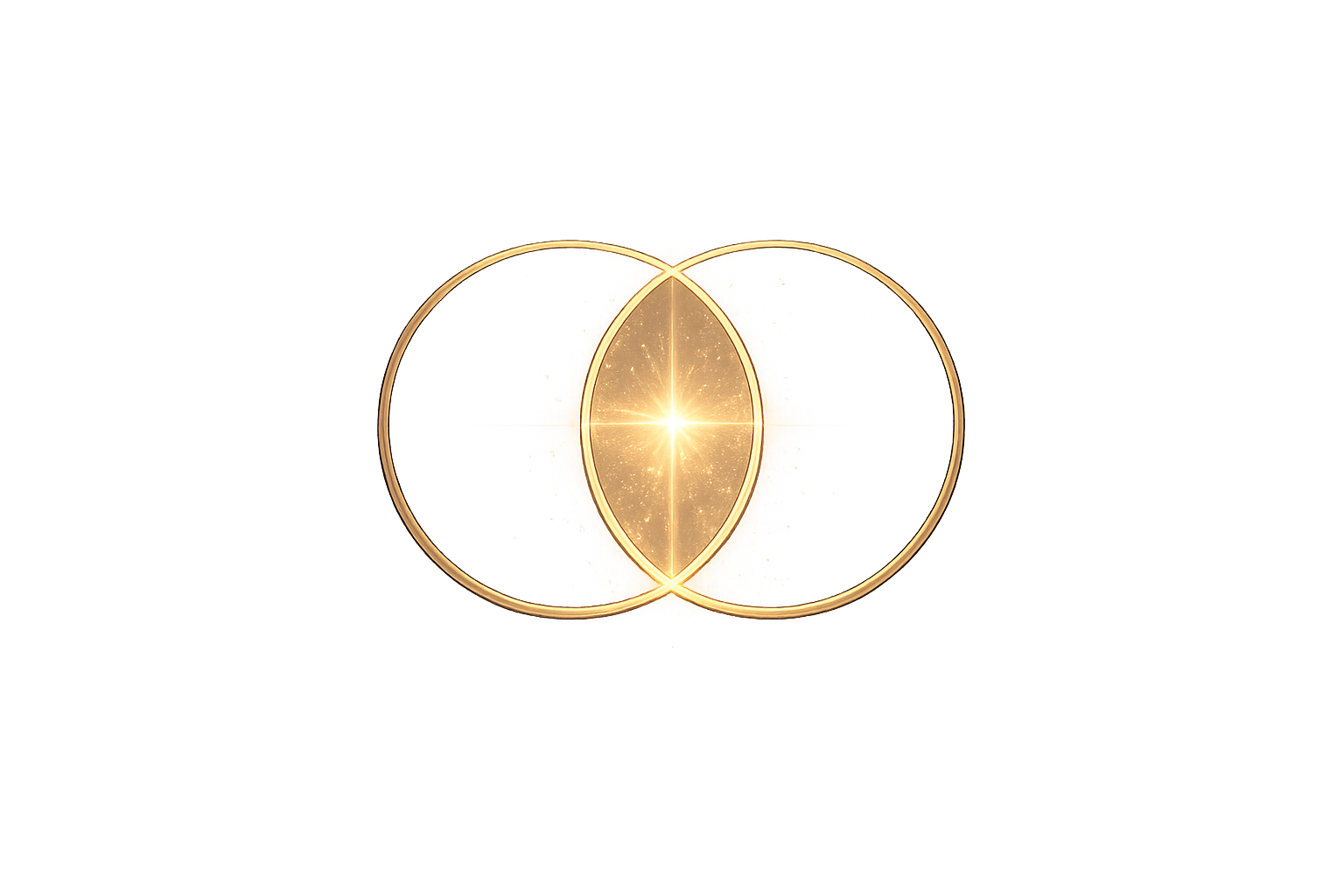
Formed by two intersecting circles, the vesica pisces symbolizes creation, union, and divine birth.
It represents the meeting of worlds: masculine and feminine, Heaven and Earth, spirit and matter. From this sacred intersection, new life emerges.
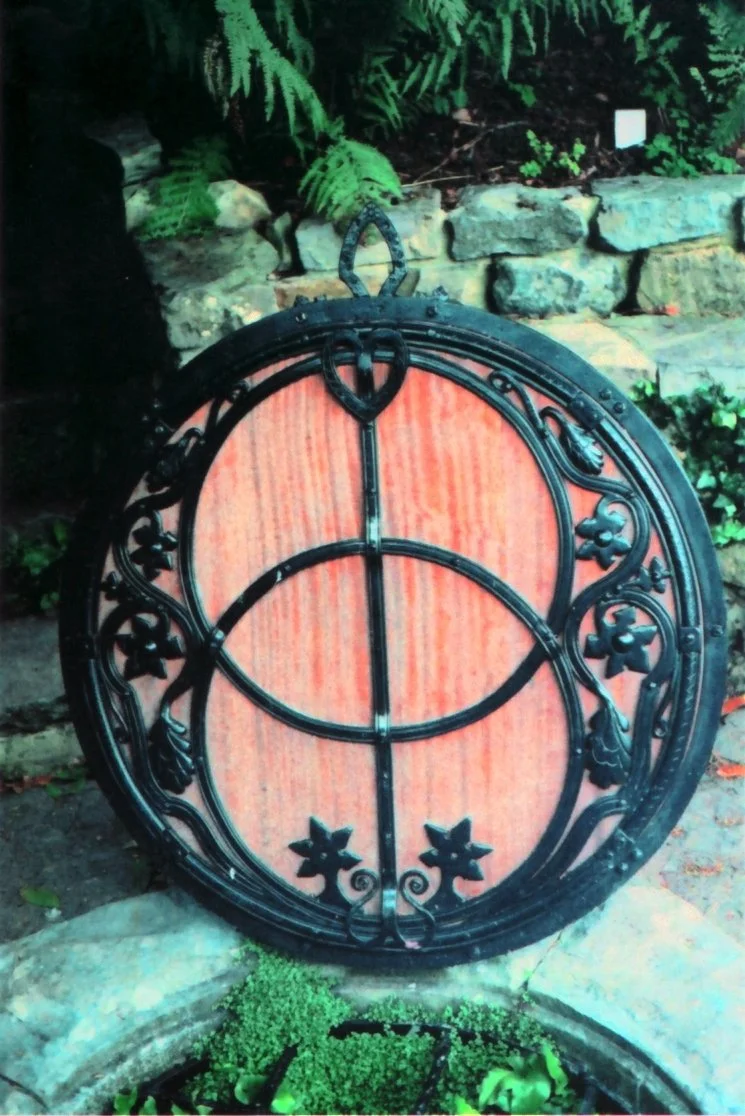
The Chalice Well in Glastonbury, England, Image Source
Many sacred architectures, artworks, and womb symbols are based on this geometry—reflecting the universal pattern of creation.
At its essence, the vesica piscis is the geometry of creation.
Two become three.
There is a meeting of polarities, of energies, of worlds, and from that meeting, a third presence arises. Born through the union itself.
This is why the vesica piscis is often associated with the womb.
The central shape mirrors the feminine gateway, the yoni, the passage through which life enters the world. It holds the imprint of birth, of emergence, of something unseen becoming seen. In sacred art, this shape often surrounds figures of divinity, framing them as if they are being revealed through a living portal.
Within Christian mysticism, the vesica piscis appears frequently in cathedral architecture and iconography. It has been used to frame Christ, Mary, and saints, suggesting a being who exists between Heaven and Earth, held within both realms at once.
There is also a resonance with the union of masculine and feminine.
Each circle can be felt as a complete field, whole in itself. Their overlap creates a shared space of intimacy, connection, and co-creation. The vesica piscis becomes the field where relationship gives rise to new life, new insight, new consciousness.
Energetically, this symbol carries the frequency of sacred union.
The Downward Pointing Triangle
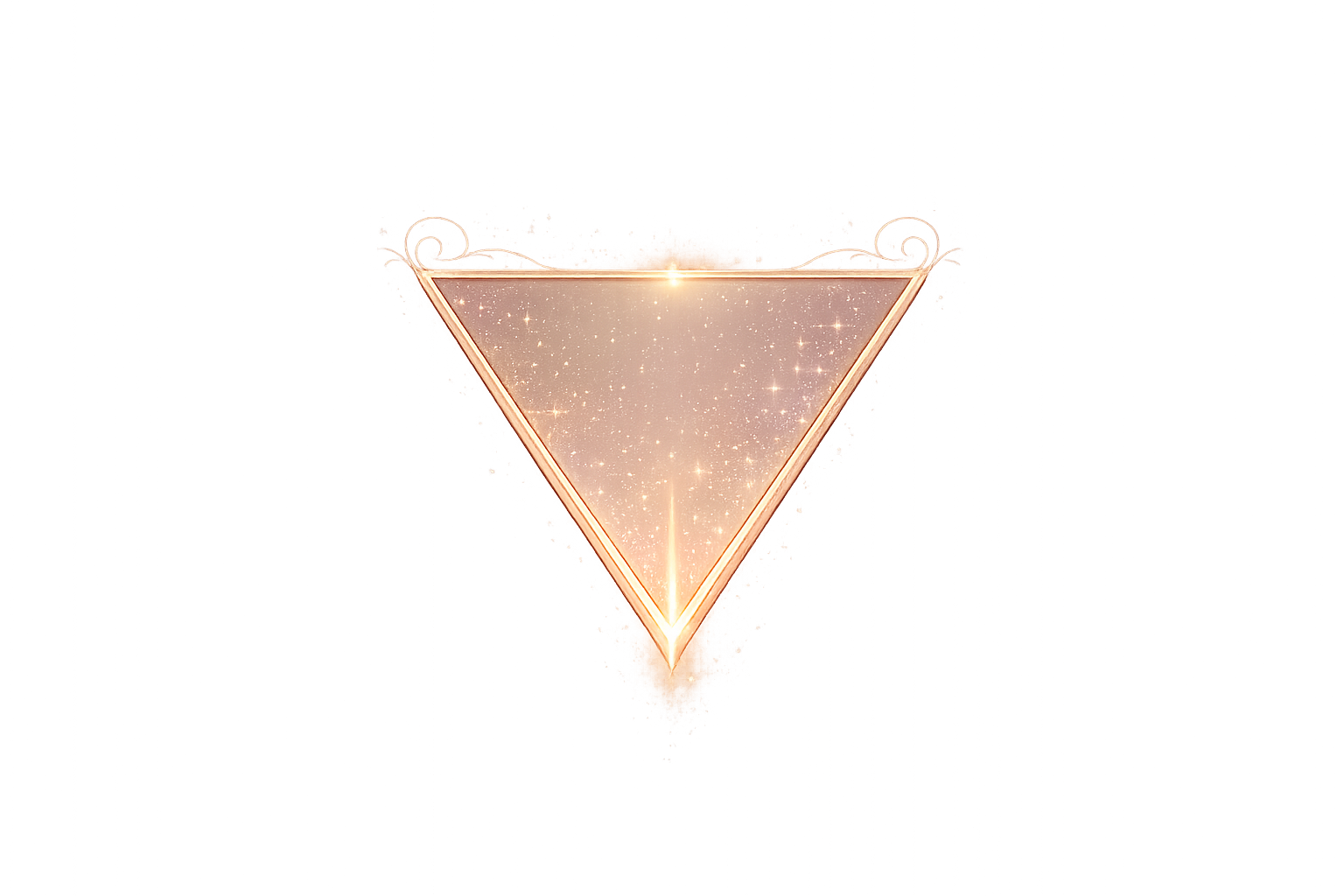
The downward-pointing triangle is one of the most direct symbols of the womb and feminine energy.
It represents receptivity, intuition, and creative power. In ancient traditions, it was honored as the gateway through which souls enter the world.
Spiritually, it reminds women that their bodies are temples of creation, whether or not they bear physical children.
The symbol is reminiscent of the literal womb, a source of creation and sacred feminine power.
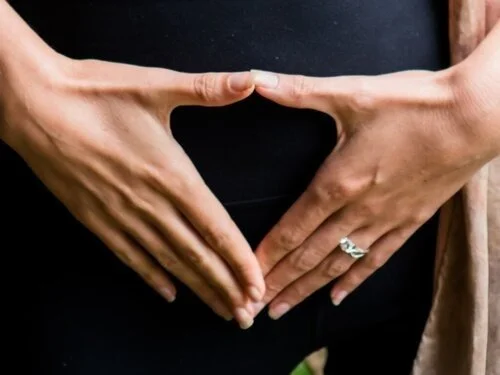
My hands on my womb, creating the downward pointing triangle
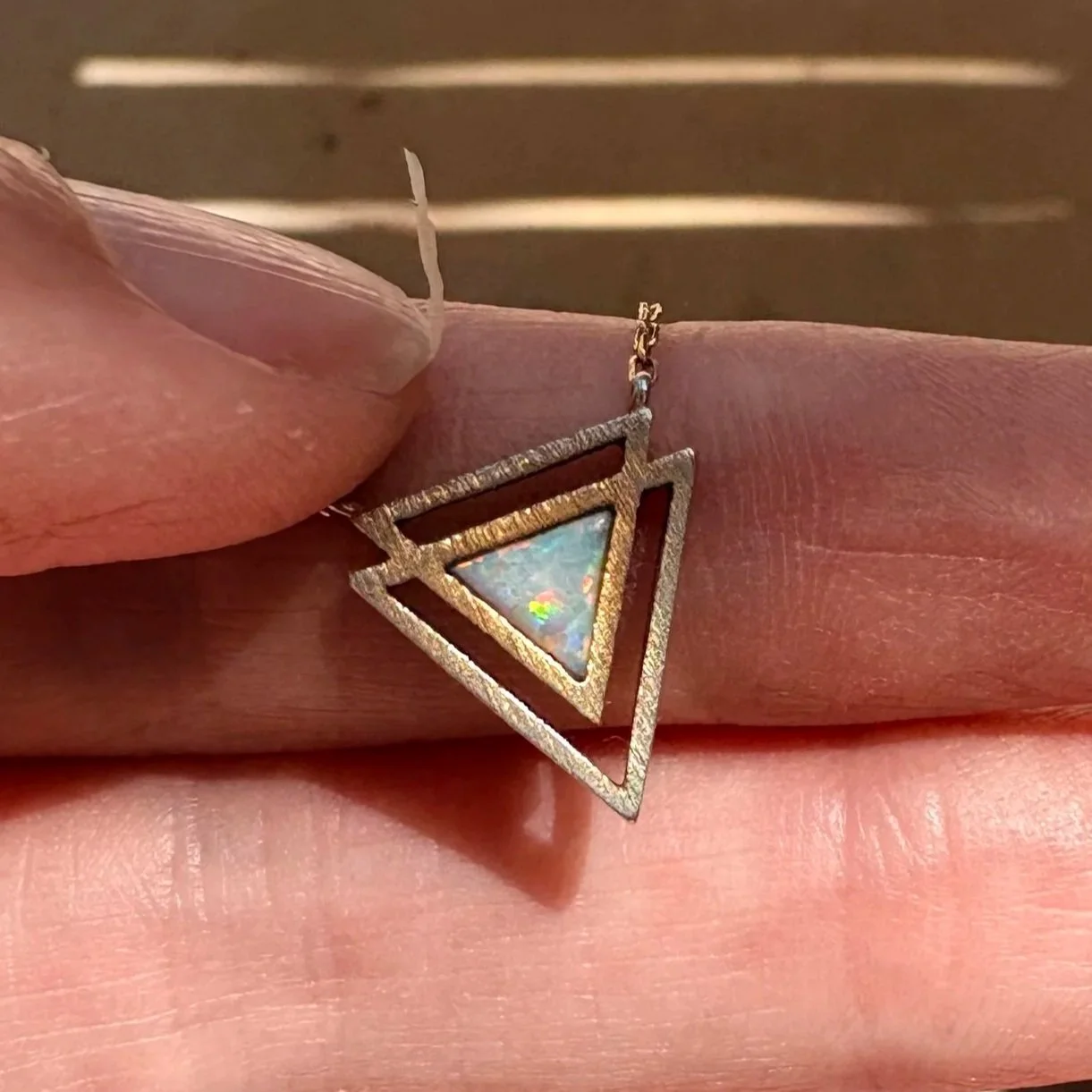
One of my favorite pendants
The Fleur-de-lis
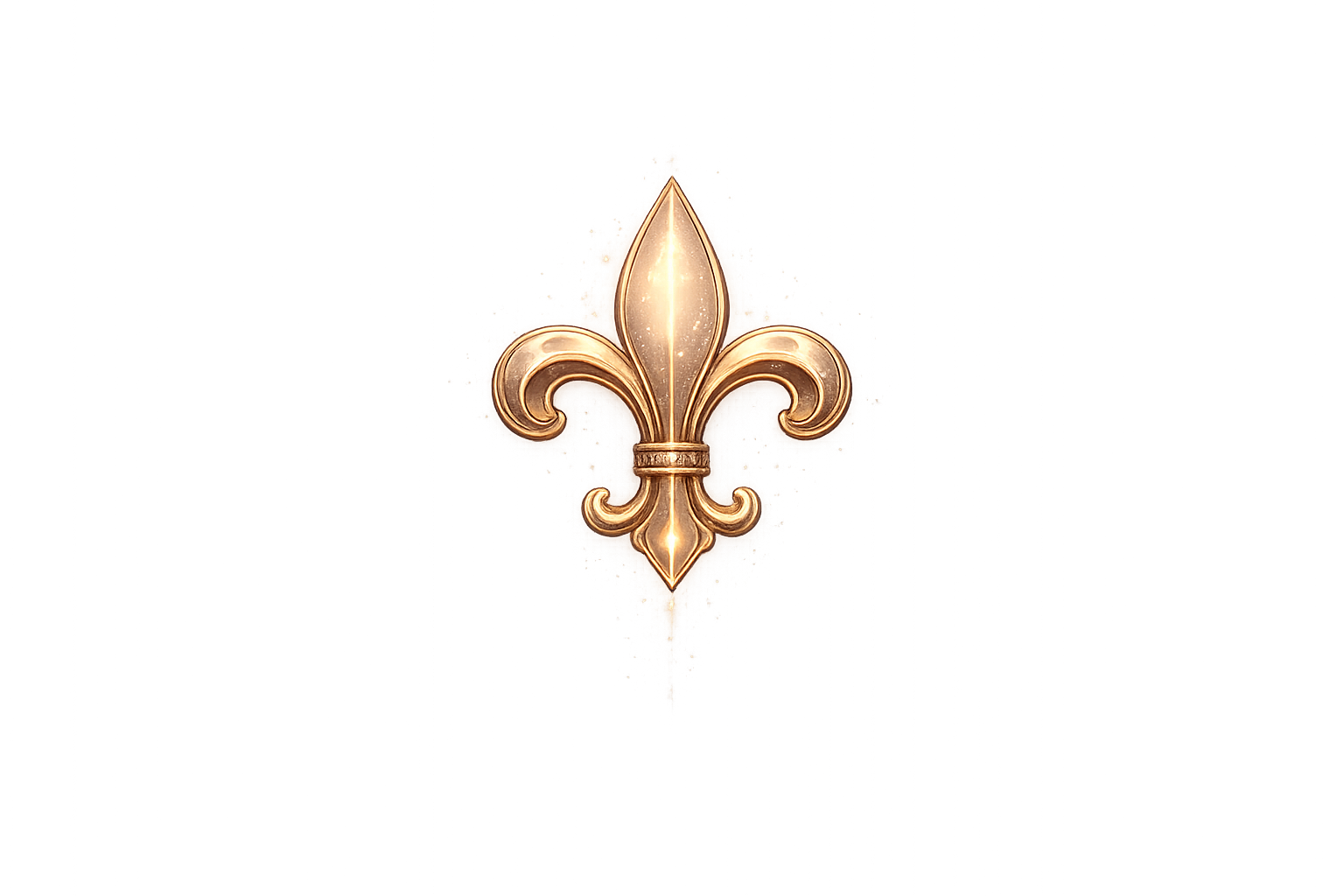
The fleur-de-lis has been interpreted as a symbol of spiritual purity, divine unity, and sacred lineage.
In ancient Egypt, similar motifs are found in lotus and papyrus designs, plants that symbolized life, rebirth, and divine order along the Nile. These stylized floral forms often represented the meeting of upper and lower Egypt, a kind of unity expressed through plants.
I have heard of associations with Mary Magdalene in France and mystical Christianity, reflecting the trinity of body, mind, and spirit. Some traditions connect it to esoteric lineages surrounding Mary Magdalene and her sacred bloodline, (In the book The Expected One, the legend of her having had 3 children is told, one petal for each lineage that came after her, one in France, one in England, and a third not as widely known which spread in Italy).
In more modern times, the fleur-de-lis became most widely known through the French monarchy, where it is seen a royal emblem that came to represent divine right, sovereignty, and protection.
It was often depicted in gold on blue, a color pairing linked to Heaven and Divine authority. The three petals were sometimes interpreted as representing Faith, Wisdom, Chivalry or later, within Christian framing of The Holy Trinity.
The Rose
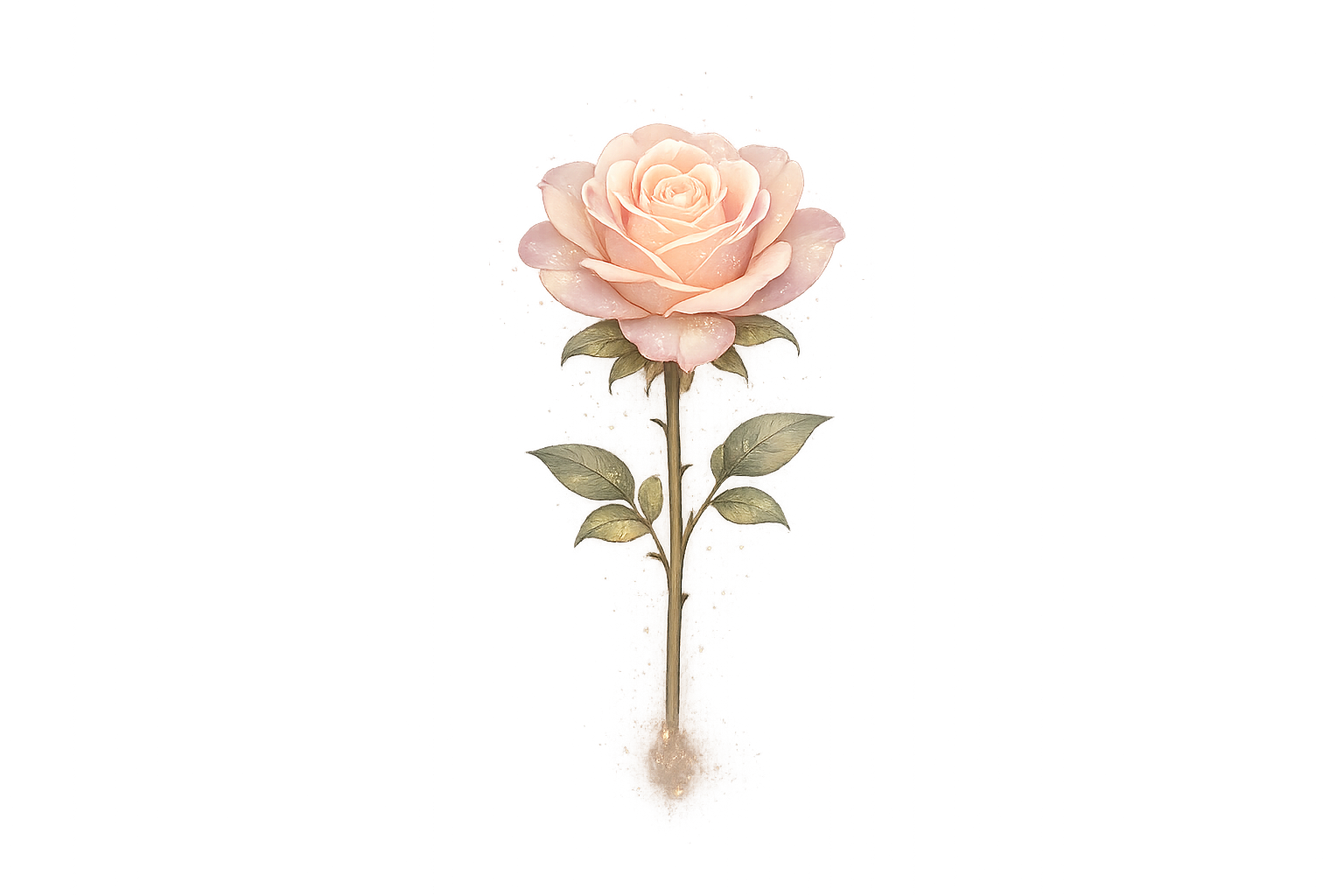
The rose is perhaps the most beloved symbol of feminine spirituality.
Its roots reach deep into the earth. Its petals open toward the sun. Its thorns protect what is precious.
The rose teaches that true beauty includes strength, boundaries, and vulnerability. It mirrors the journey of the awakened woman ~ soft and fierce, tender and resilient.
The wisdom of the rose knows when to bloom and when to go dormant to focus on nourishing its roots. It does not apologize for its beauty and fragrance. It blooms with beauty and grace.
The Venus Rose (The 5-Petaled Rose)
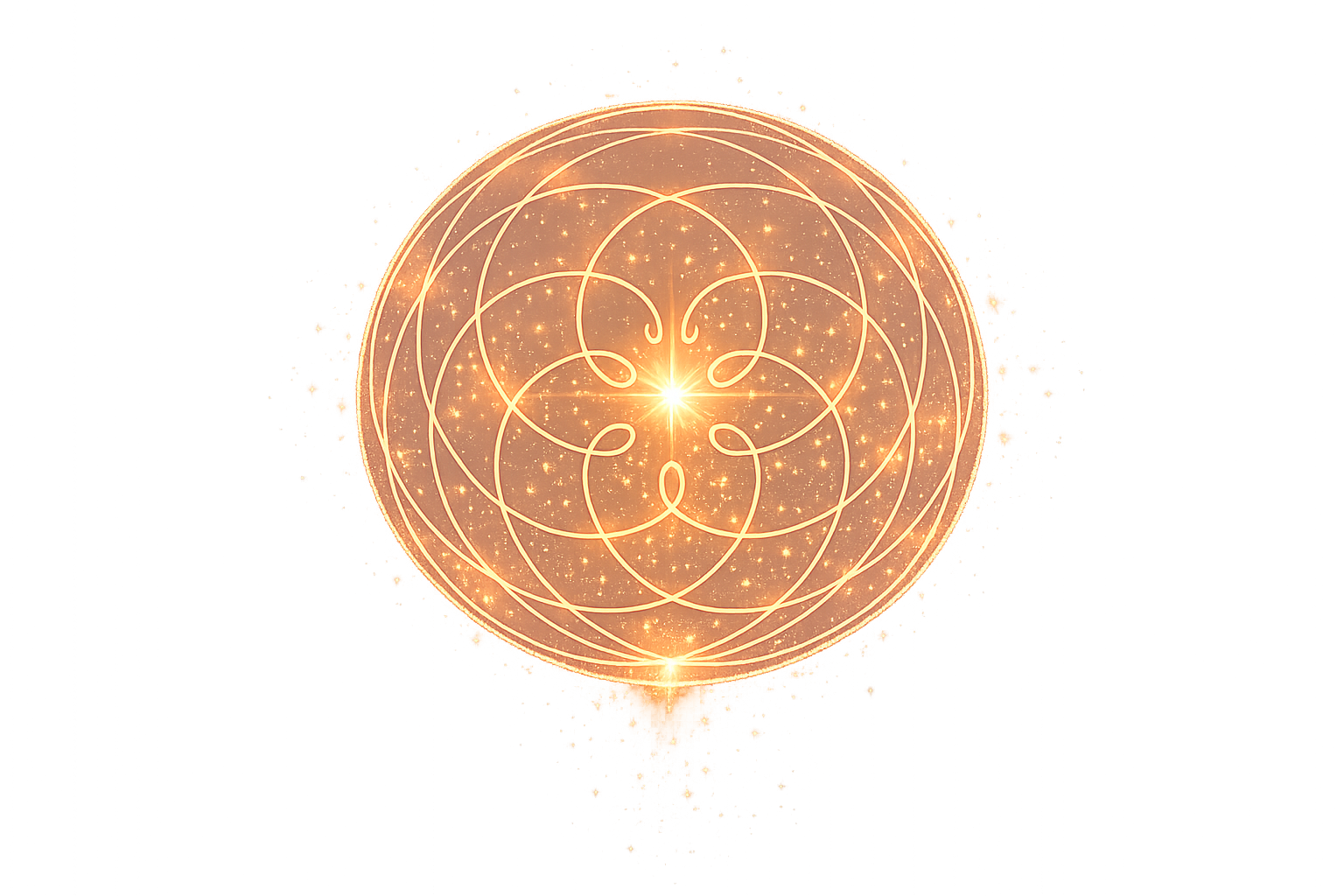
The Venus Rose traces the geometric pattern Venus creates in the sky over eight years, forming a five-petaled flower.
This celestial design reflects harmony, love, and divine order. It links feminine spirituality to cosmic intelligence.
The original roses also had five petals, connecting Venus and the rose through time.
Like the path of Inanna, The Venus Rose path leads us through death, rebirth and initiation, just like Venus moves through the sky, sometimes disappearing from view to transform and eventually be reborn as the morning or evening star.
The Labyrinth
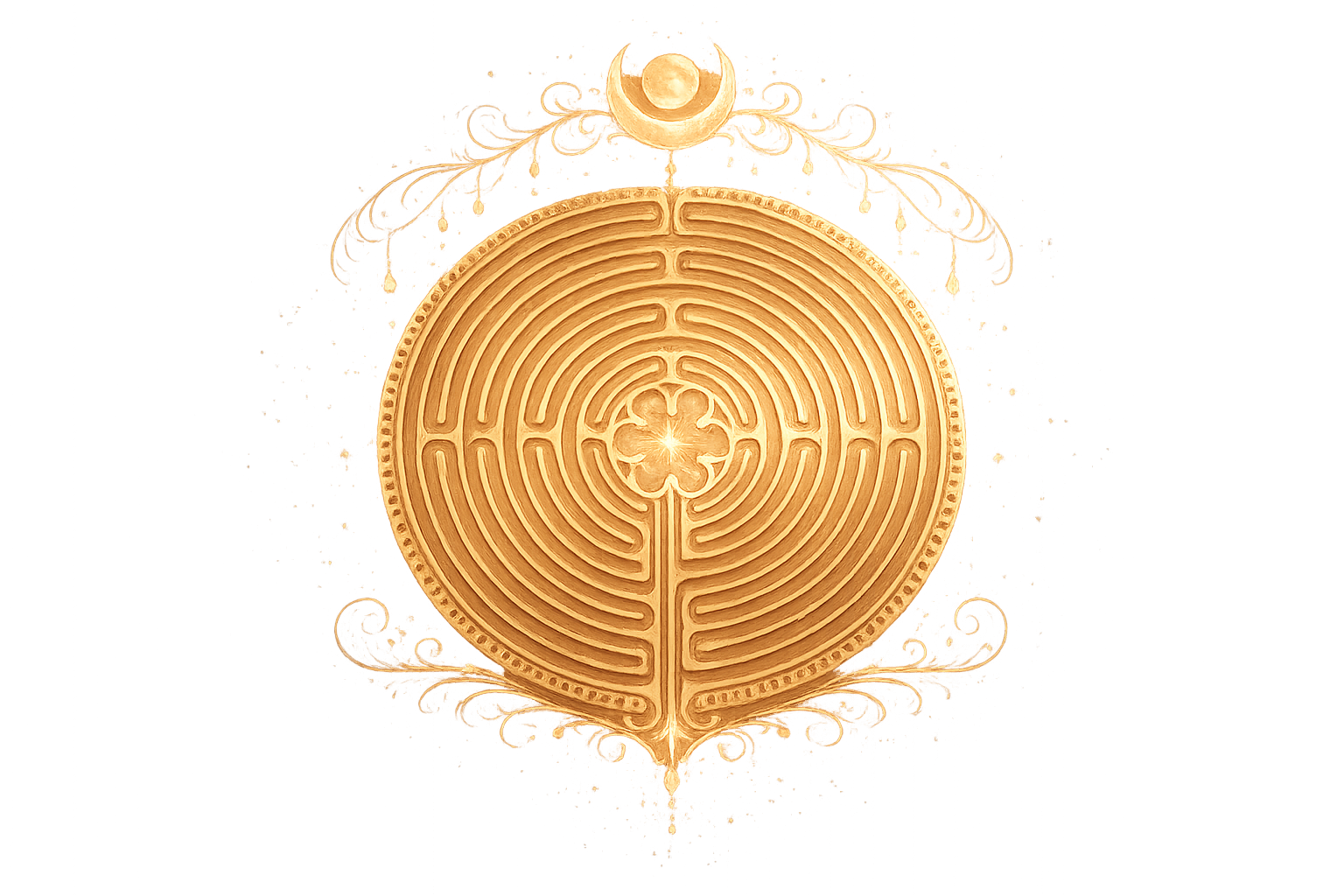
Found in ancient Greece and in medieval cathedrals like Chartres Cathedral, the labyrinth represents the spiritual journey itself.
Unlike a maze, it has one path. You cannot get lost, and you just need to keep placing one foot in front of another. Some say it is a symbol for the path of salvation, sometimes we may feel lost on the path, but eventually it leads us to the center, God, realization, if we just keep walking.
Walking a labyrinth mirrors initiation: descent, surrender, revelation, and return. It teaches patience, trust, and presence. It is a walking meditation to remember the challenges, twists and turns of the path, eventually leading to the ultimate goal.
Some believe there was an ancient gnostic Christian practice of walking a labyrinth and internally repeating the Lord’s prayer with the six petaled rose in the center.
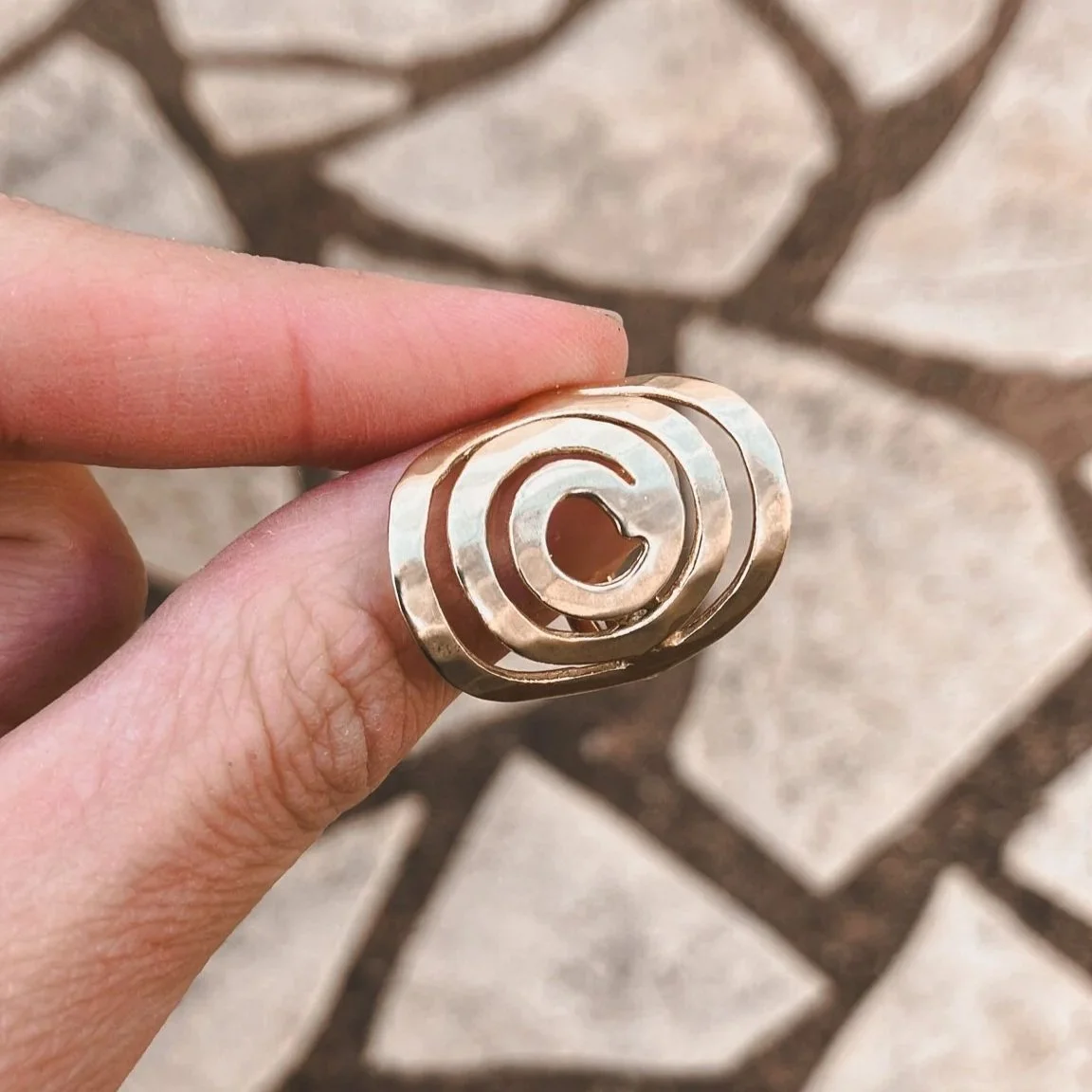
Labyrinth Ring Found in Crete, Greece
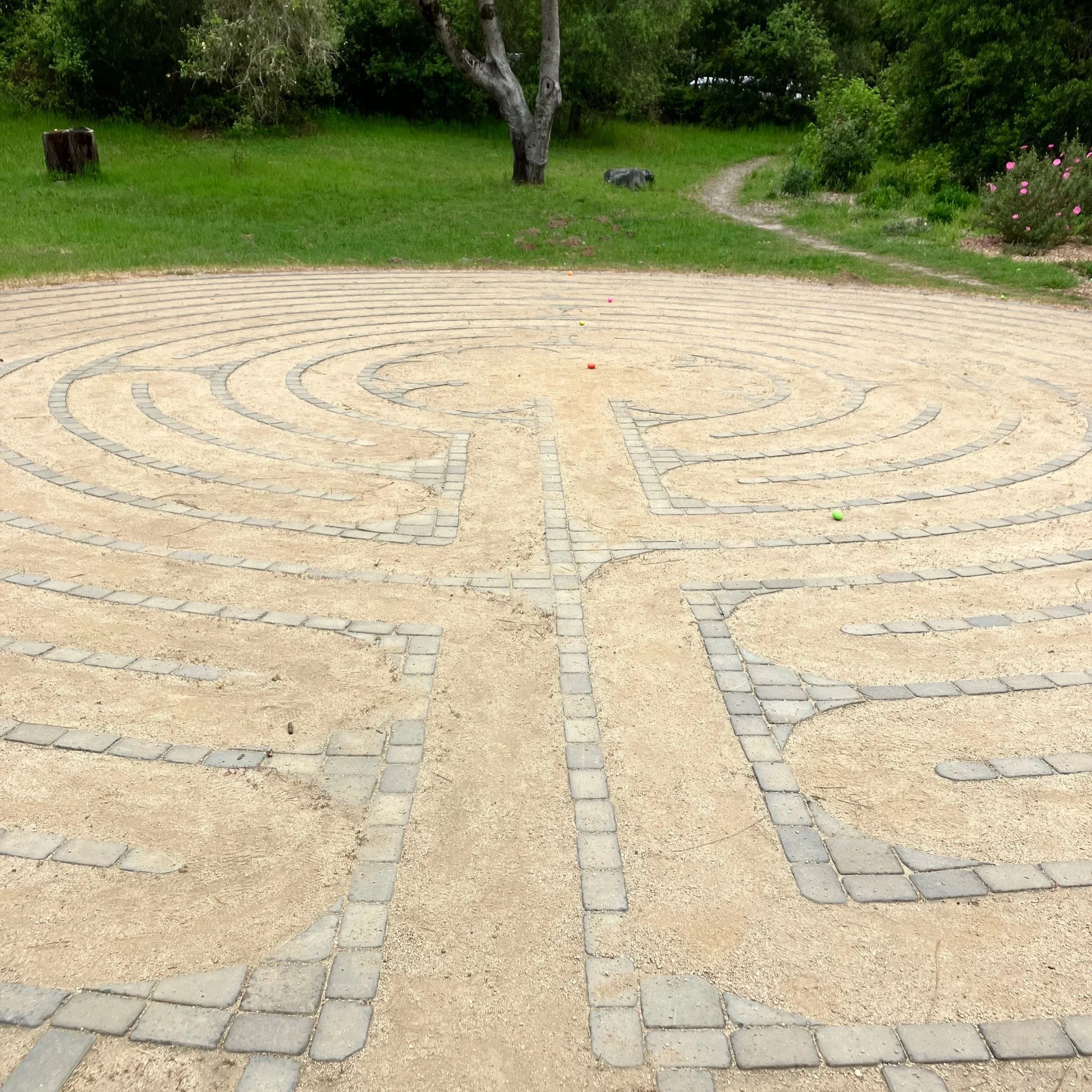
Chartres Style Labyrinth in Sebastopol, CA
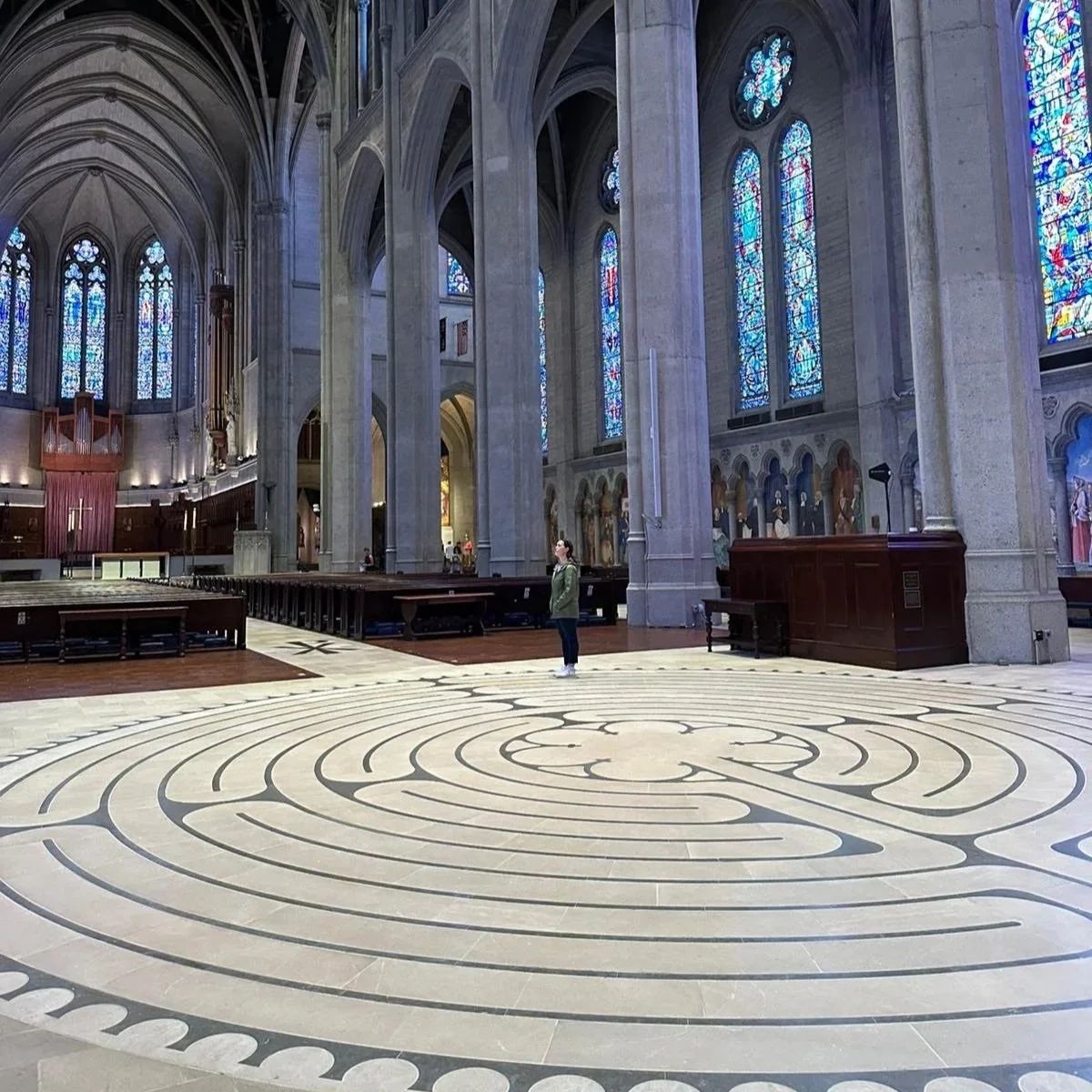
Chartres Style Labyrinth on the Floor of Grace Cathedral in San Francisco
The Six-Petaled Rose
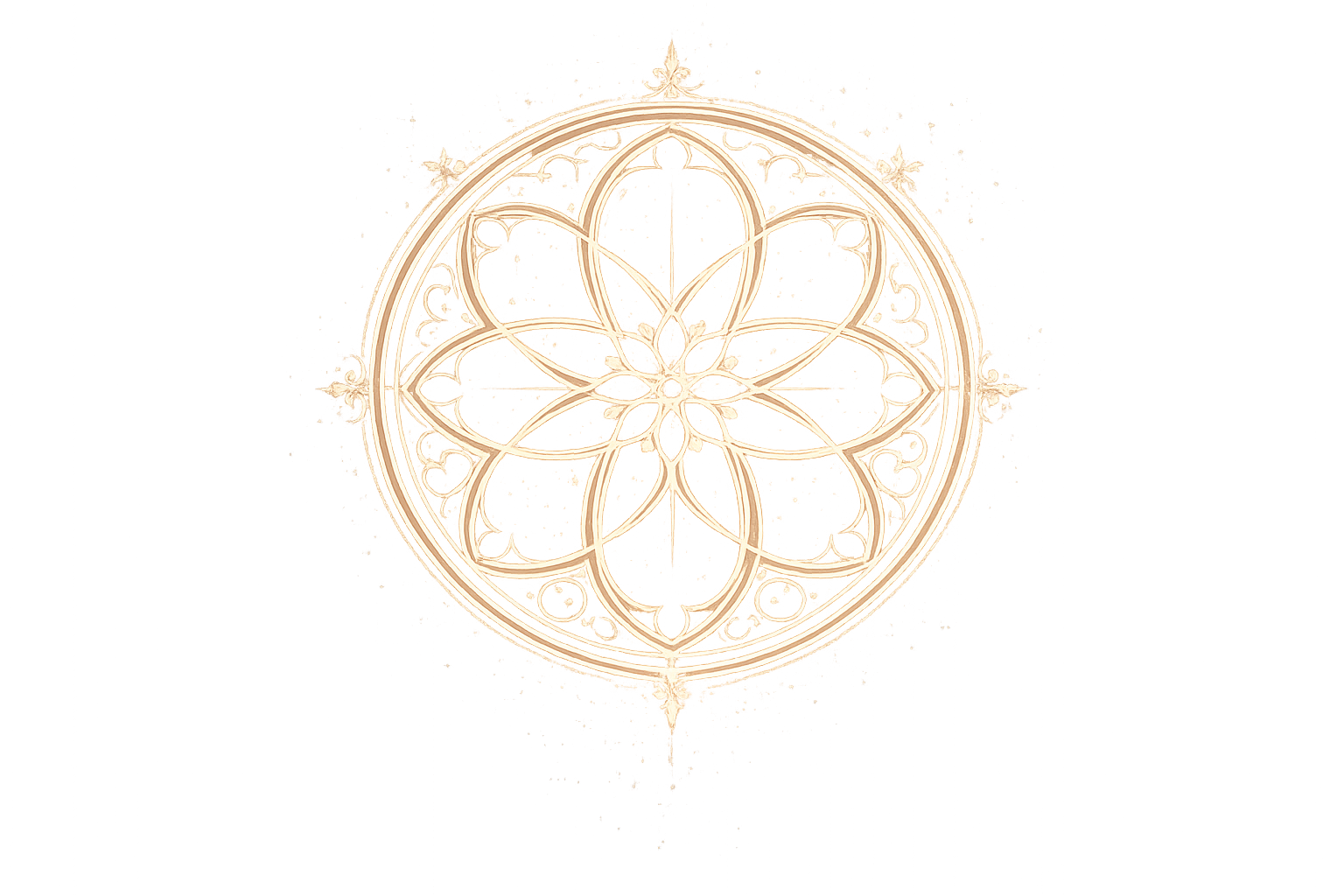
The six-petaled rose appears etched into stained glass, carved into stone, hidden in plain sight within ancient churches. A symbol of harmony and union, where Heaven and Earth meet within the human heart.
Some traditions speak of it as a hidden teaching and gospel of Jesus called the Book of Love. I saw this symbol all over France, especially in Notre Dame.
This rose is a remembrance of love as the central path, encoded in form and symbol.
The six petals create a perfect balance, a union of masculine and feminine, spirit and matter. It reflects the coherence that arises when love is fully embodied. Learn more about the ancient gnostic Christian practice of the prayer of the six-petaled rose.
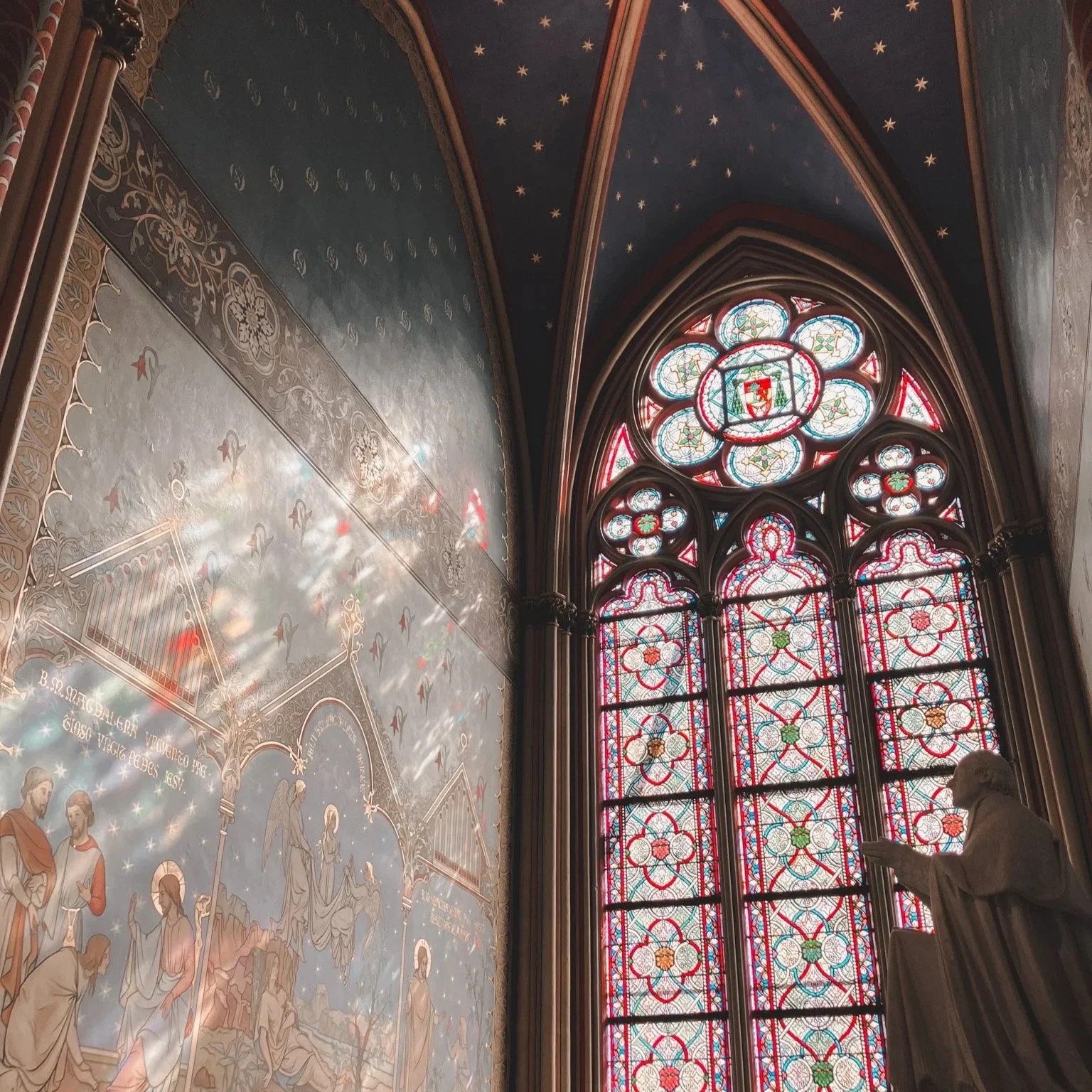
A 6-Petaled Rose Stained Glass inside the Mary Magdalene Gallery of the Notre Dame
The Serpent
The serpent moves close to the earth, attuned to its rhythms.
She sheds her skin again and again, a living symbol of transformation, renewal, and rebirth. There is an ancient intelligence within the serpent ~ instinctual, sensual, deeply connected to life force.
In many traditions, the serpent represents kundalini energy, the awakening current that rises through the body, activating higher states of consciousness.
The serpent teaches the wisdom of cycles, of letting go, of trusting the unfolding. A reminder that growth often requires the courage to release what once felt like identity.
The Camargue Cross
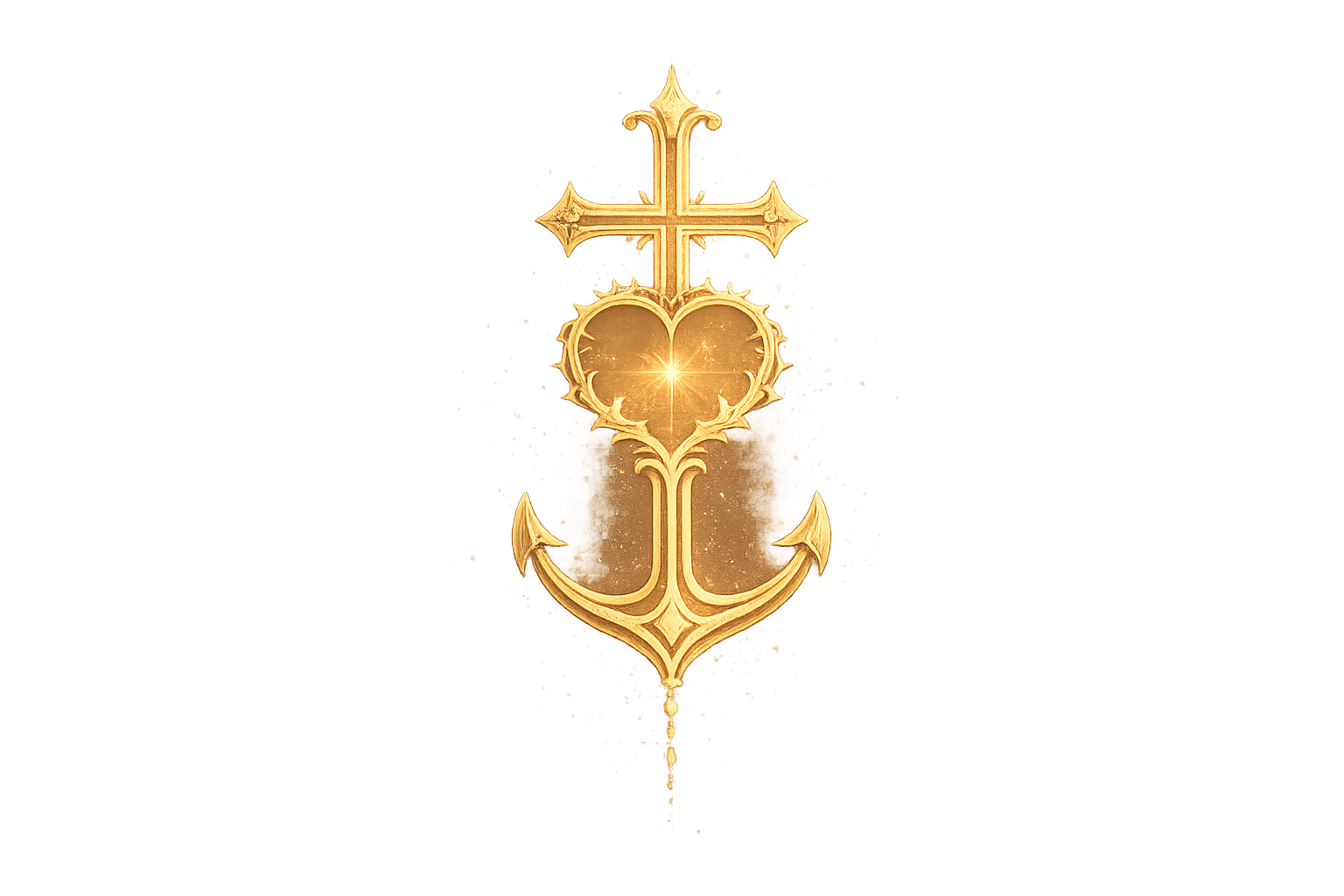
The Camargue Cross weaves together three sacred forms.
The cross, the heart, and the anchor, symbols of faith, love (sometimes seen as charity), and hope. The cross represents faith, the heart, love of the three Mary’s and the anchor hope. You’ll find this symbol all over the Camargue region of France, where the three Mary’s (Mary Magdalene, Mary Salome and Mary Jacobe) were said to have landed after the crucifixion to begin their ministry.
There is a grounding within this symbol, a sense of devotion that is both rooted and expansive. Love held steadily through all tides.
It reflects a path where the heart remains open, anchored in something deeper than circumstance, guided by an inner knowing that does not waver.
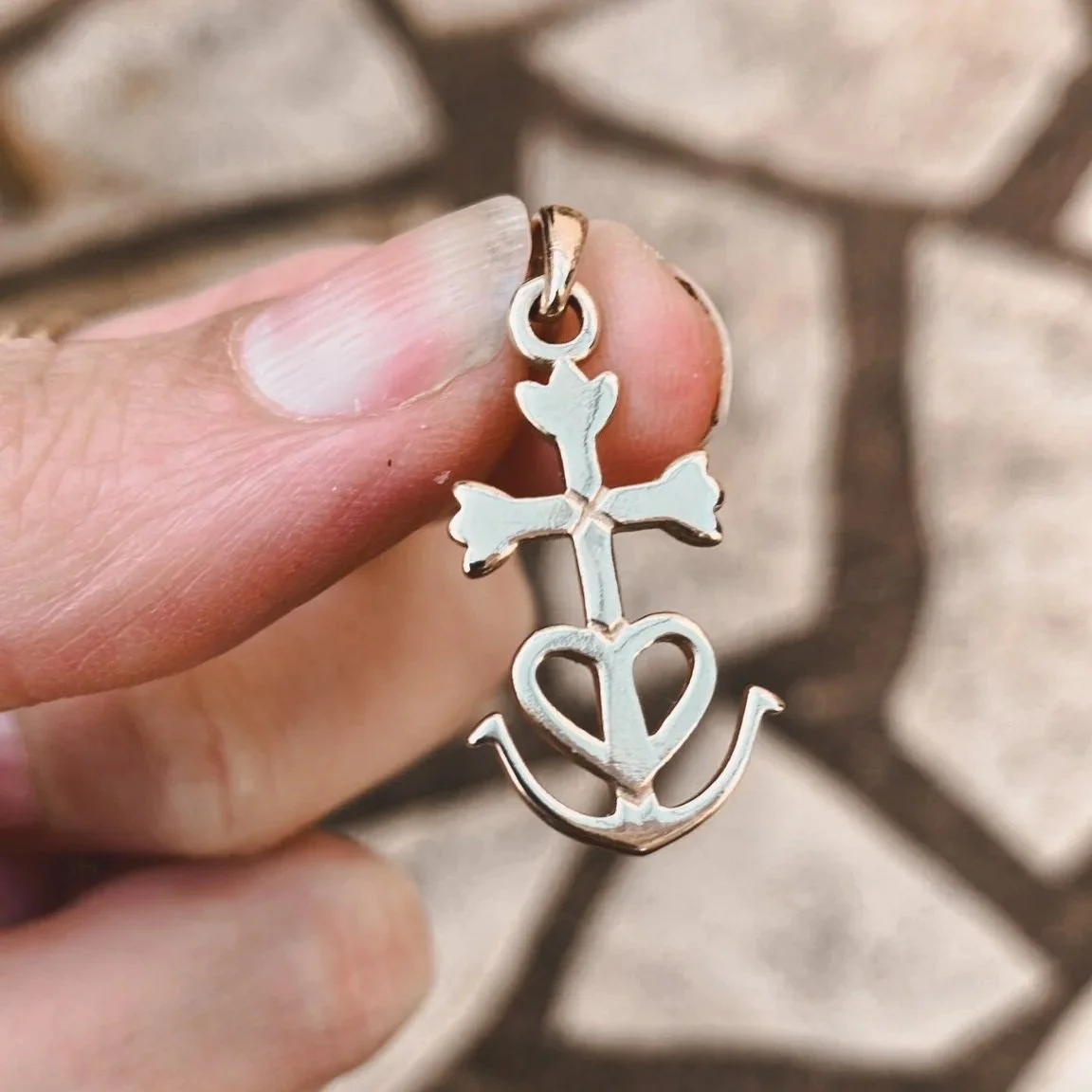
A gold pendant I found in Camargue, France
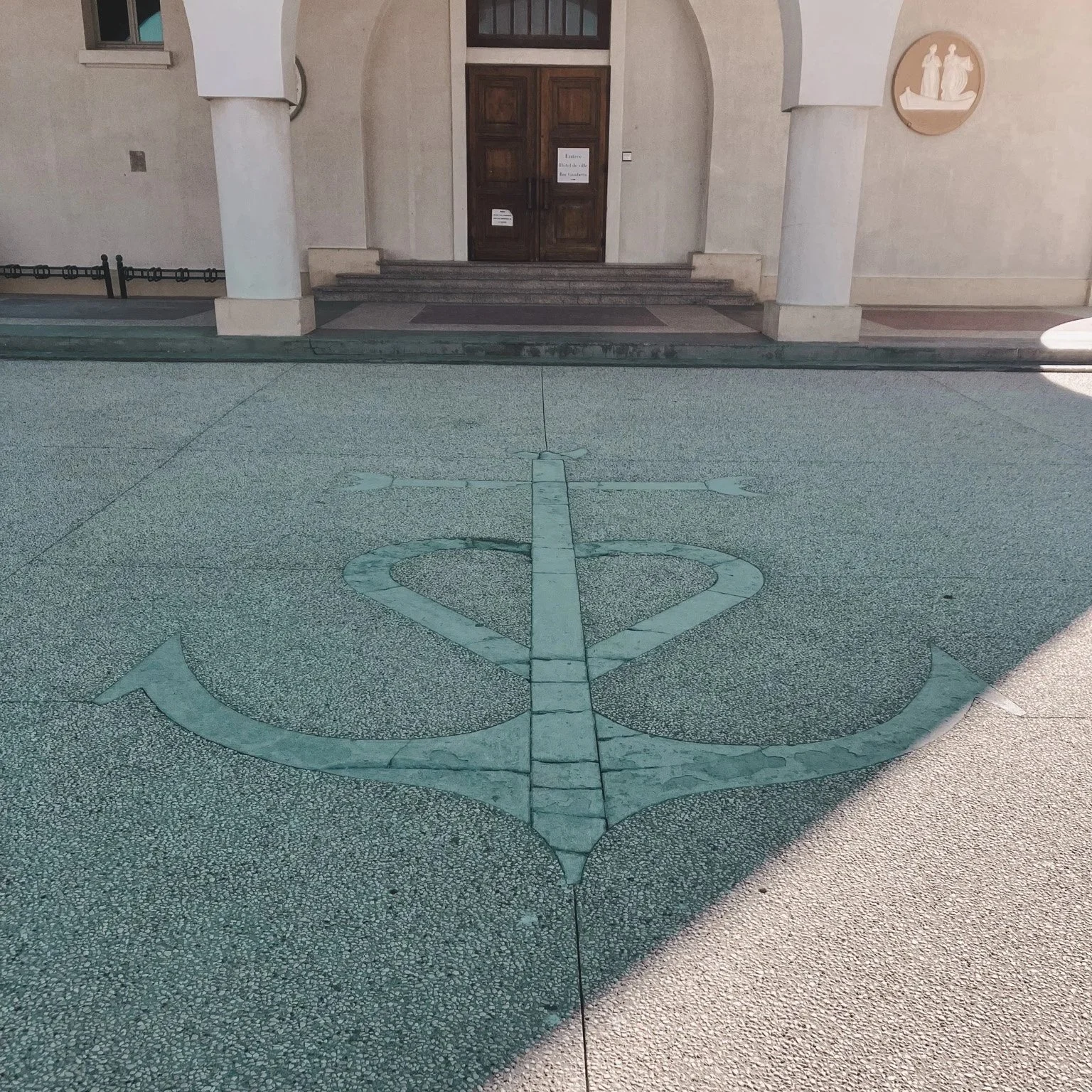
Symbol depicted in stone in Camargue, France
The Honeybee
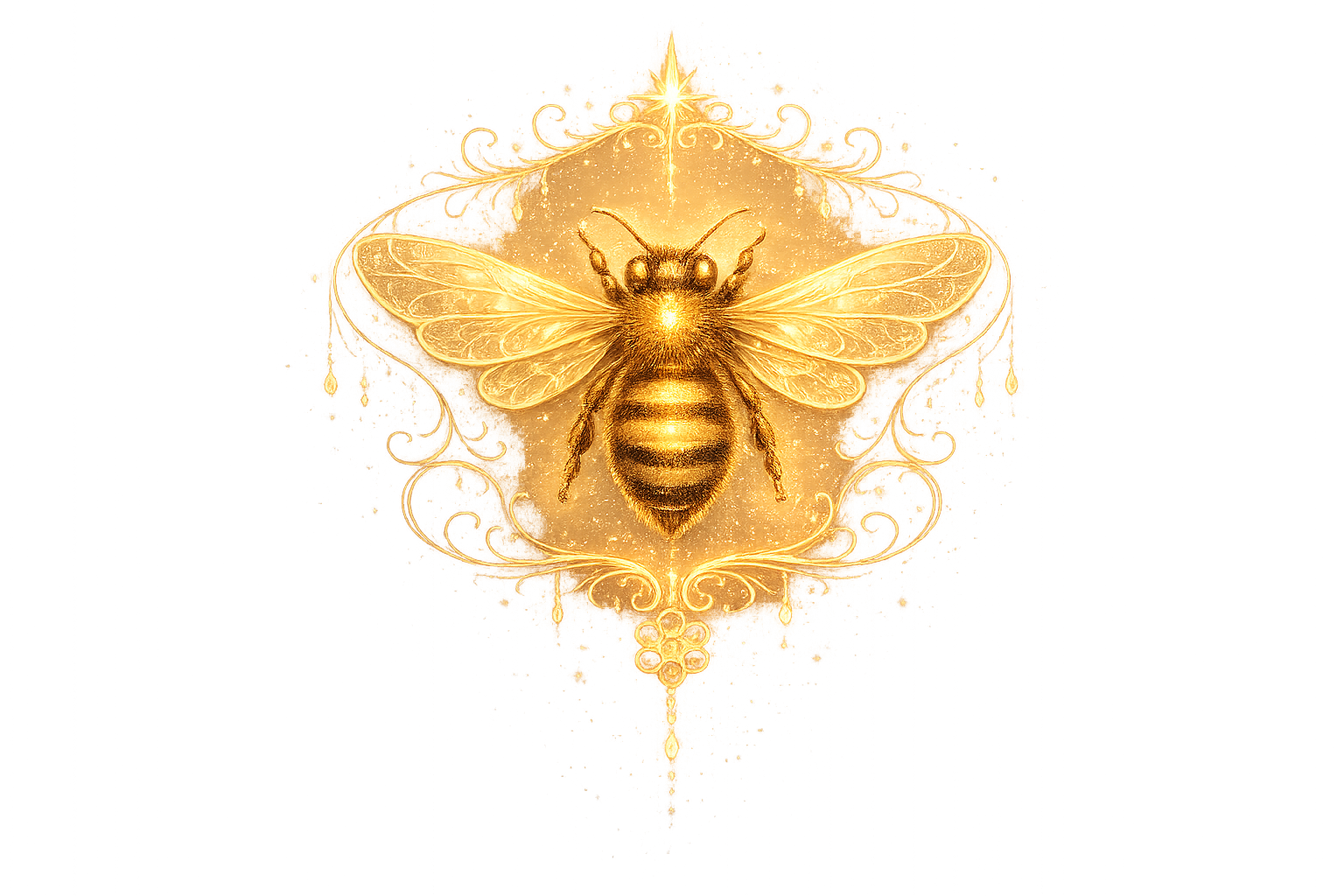
The honeybees live in sacred feminine collaboration, creating sweetness and abundance in service to their Queen.
Each bee moves with purpose, contributing to a collective rhythm that creates nourishment, beauty, and abundance. The hive becomes a living field of devotion, where sweetness is created through shared effort and attunement.
Worker bees are female, serving the life of the whole while honoring the presence of their Queen. There is an intelligence in their cooperation, a harmony that arises through unity.
In ancient myth, honeybees were seen as messengers of the divine. Some stories connect them to Venus and Hathor, carrying frequencies of love, fertility, and creation.
They remind us of the power of community, of shared vision, of devotion expressed through action.
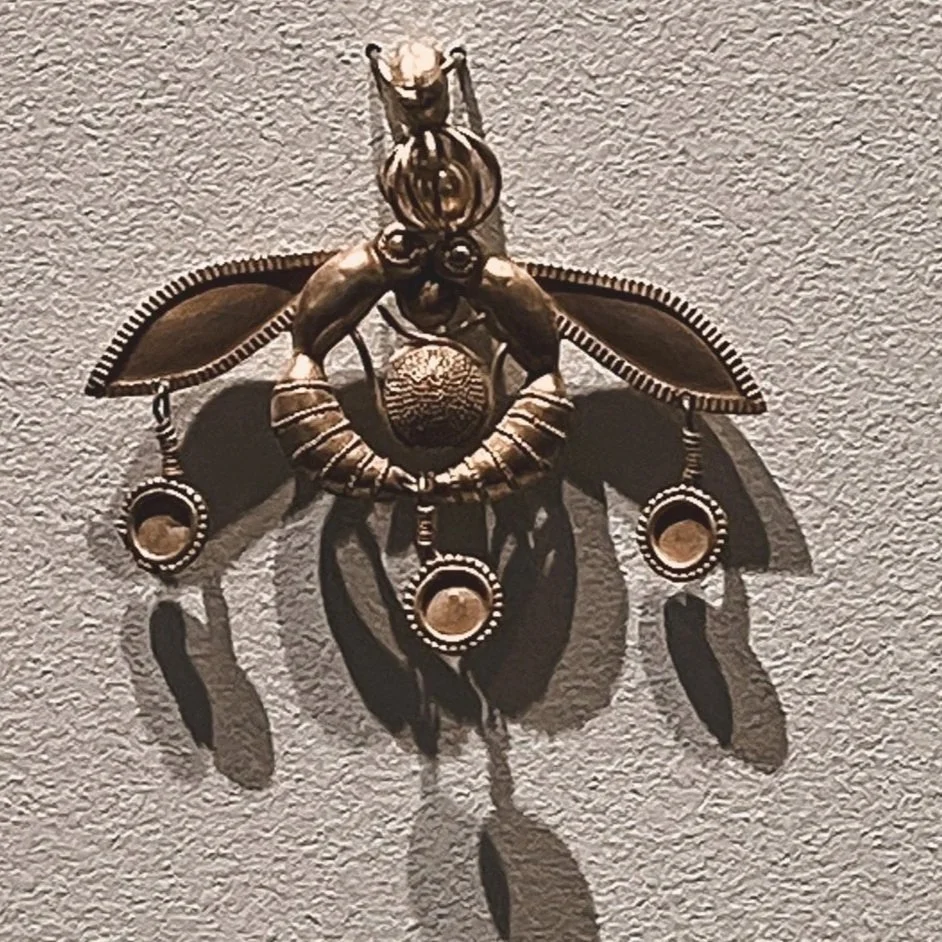
A golden honeybee pendant from ancient Greece found in a museum in Crete
The Cow
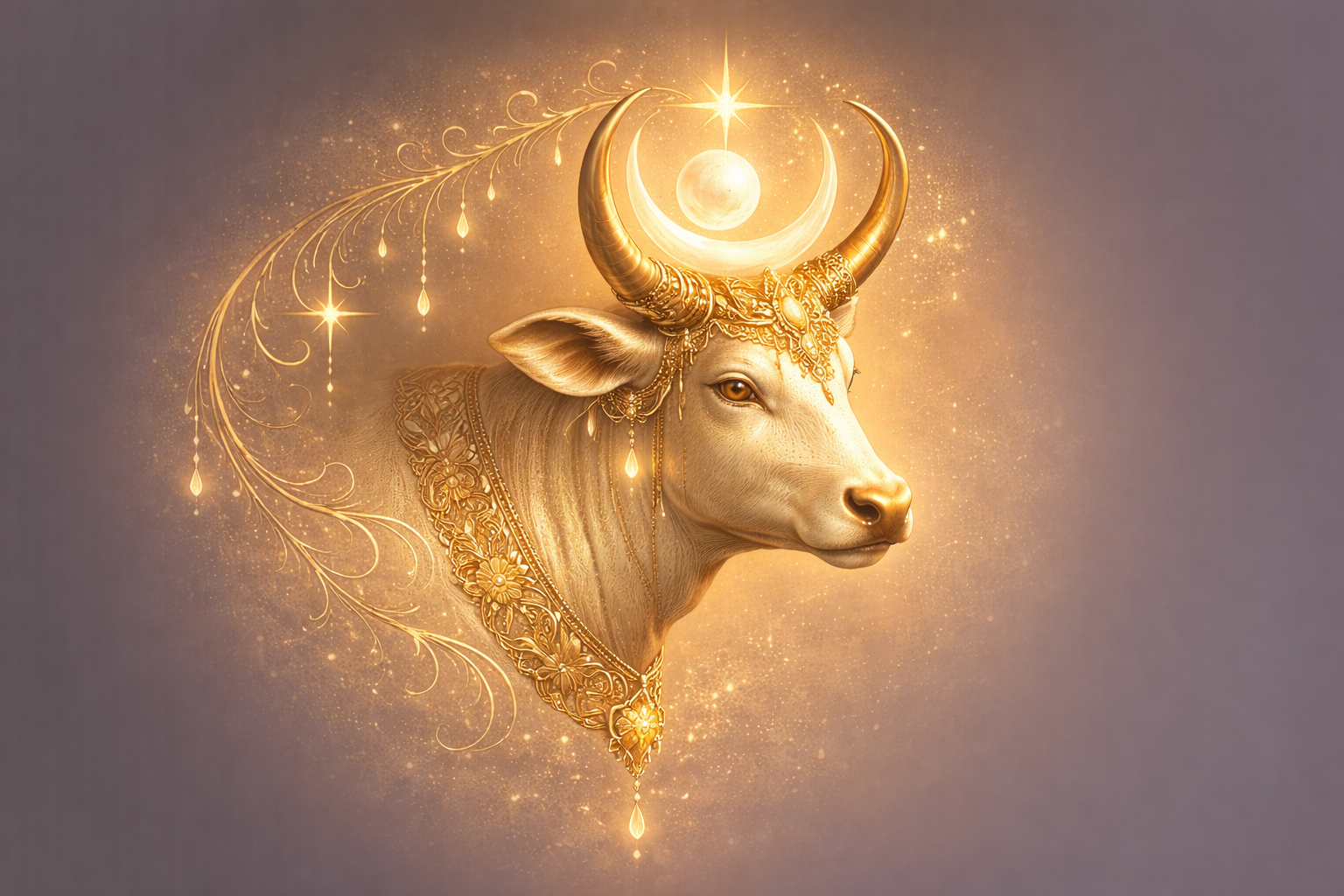
The cow embodies feminine generosity, fertility, nourishment and gentle strength.
She is a symbol of fertility, of life sustained through care, through presence, through giving. In the imagery of Hathor, she appears with horns and a sun disc, radiating abundance and maternal power.
There is a softness in her gaze, a steadiness in her being. She represents the sacred role of the provider, the one who nourishes life with consistency and devotion.
Milk flows as a symbol of sustenance and generosity, a reminder of the body’s ability to create and sustain life.
The cow teaches the quiet power of care, of tending, of holding life with reverence.
A symbol of fertility, also connected to the goddess Hathor who we see with cow ears, horns and sun disc representing fertility, mother’s milk, abundance, provider and nourisher.
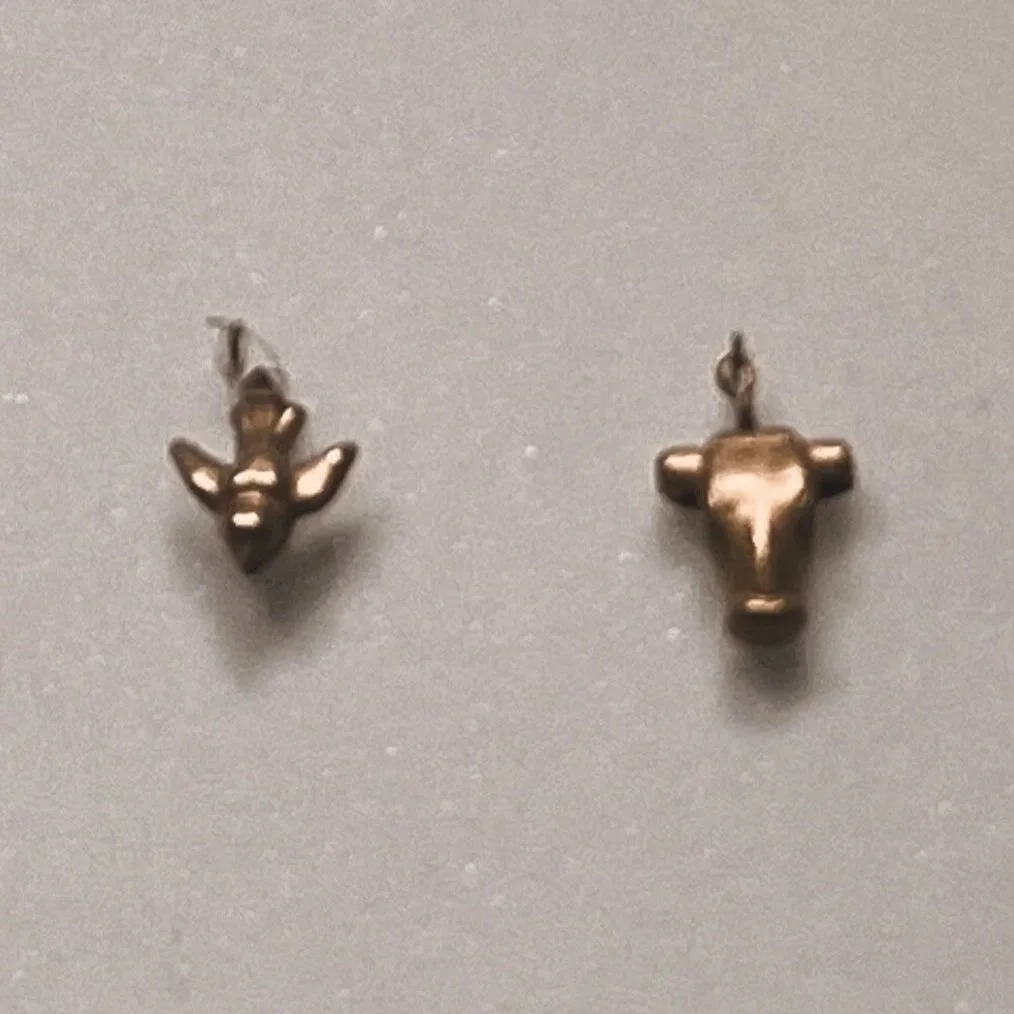
Anceint golden cow and dove pendants found on my travels in Crete, Greece
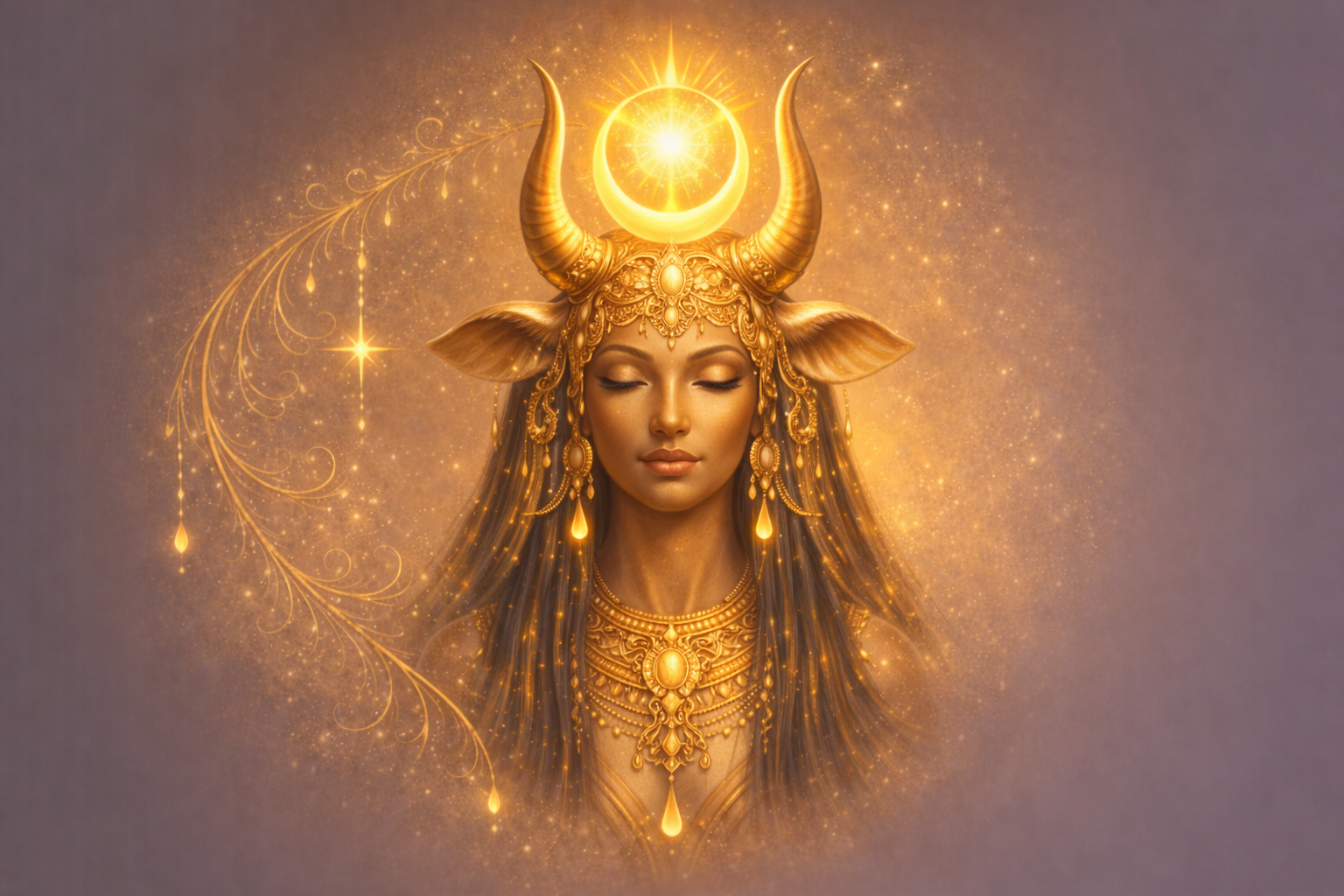
Radiant depiction of the Goddess Hathor
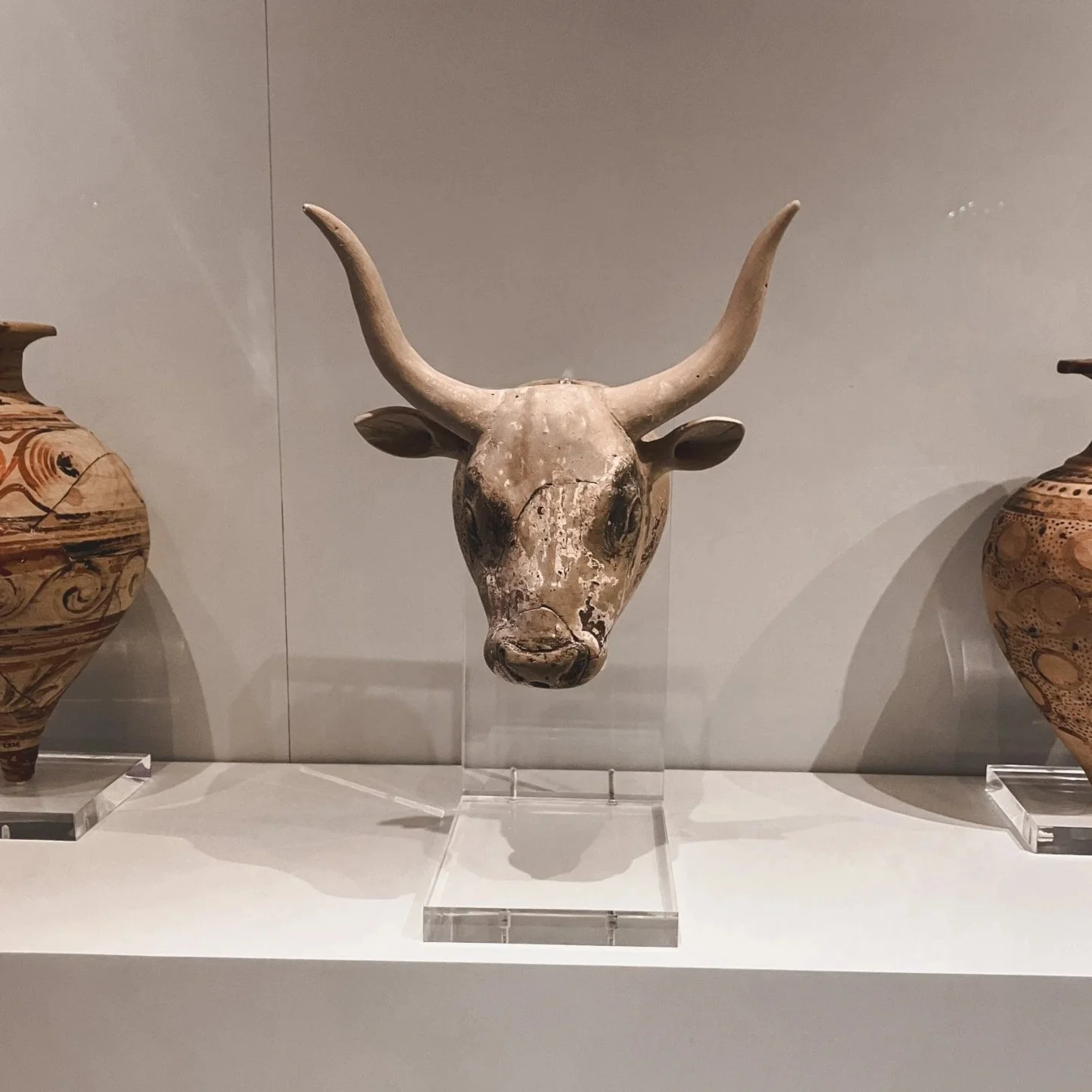
The cow, also a symbol in an ancient Greek labyrinth origin story (Ariadne and the golden thread)
The Dove
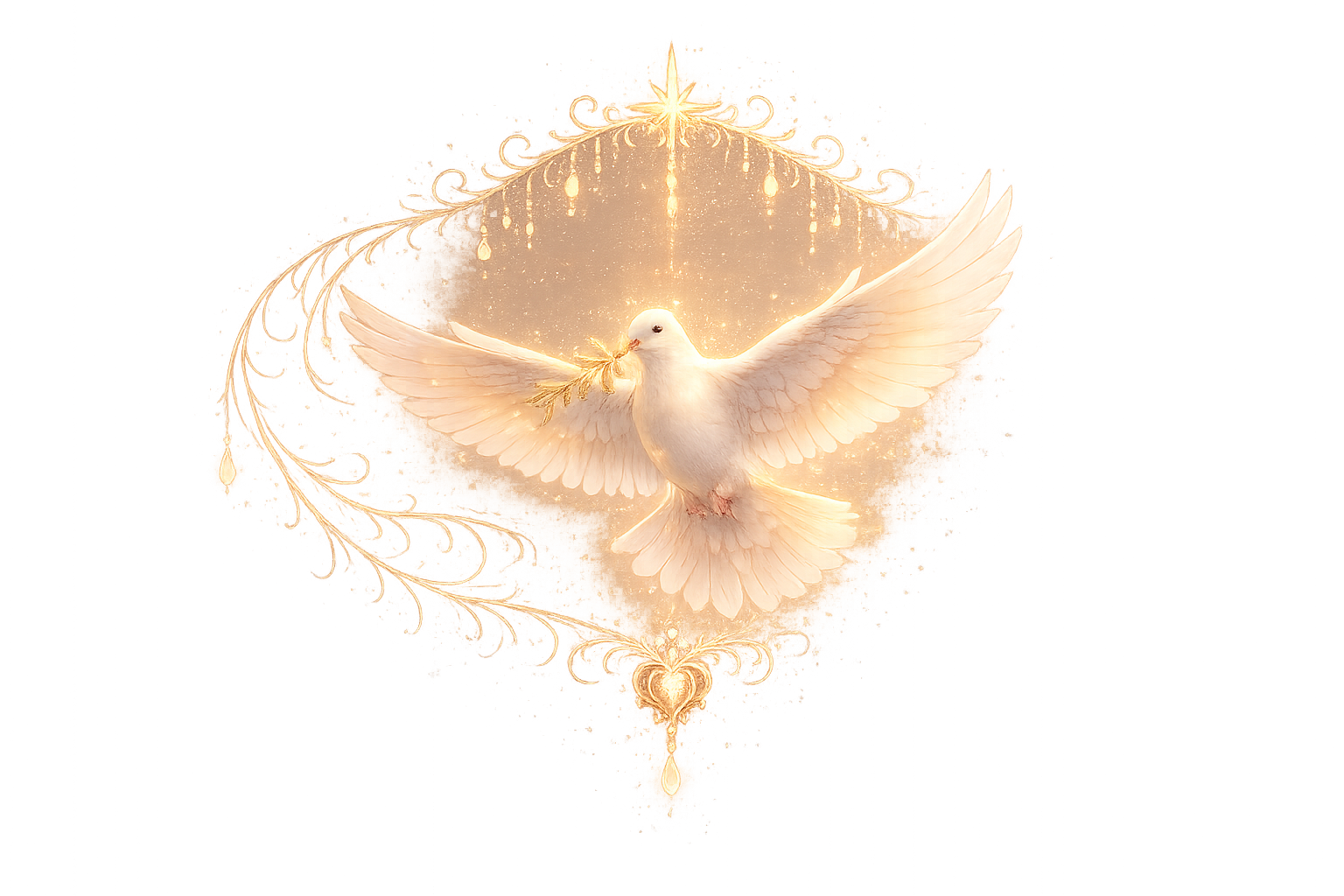
The dove carries the frequency of purity and peace.
Soft-winged and luminous, she has long been seen as a messenger between worlds. In certain traditions, she is connected to Sarah-Tamar, the daughter of Jesus and Mary Magdalene, representing a pure heart and a lineage of love carried forward.
At the baptism of Jesus, the dove appeared as the heavens opened, a sign of divine recognition and truth. For many, this affirmed that he was the Messiah many people believed him to be.
There is a gentleness to the dove, a purity of heart, a devotion to love that remains open, trusting, and clear.
The Lotus
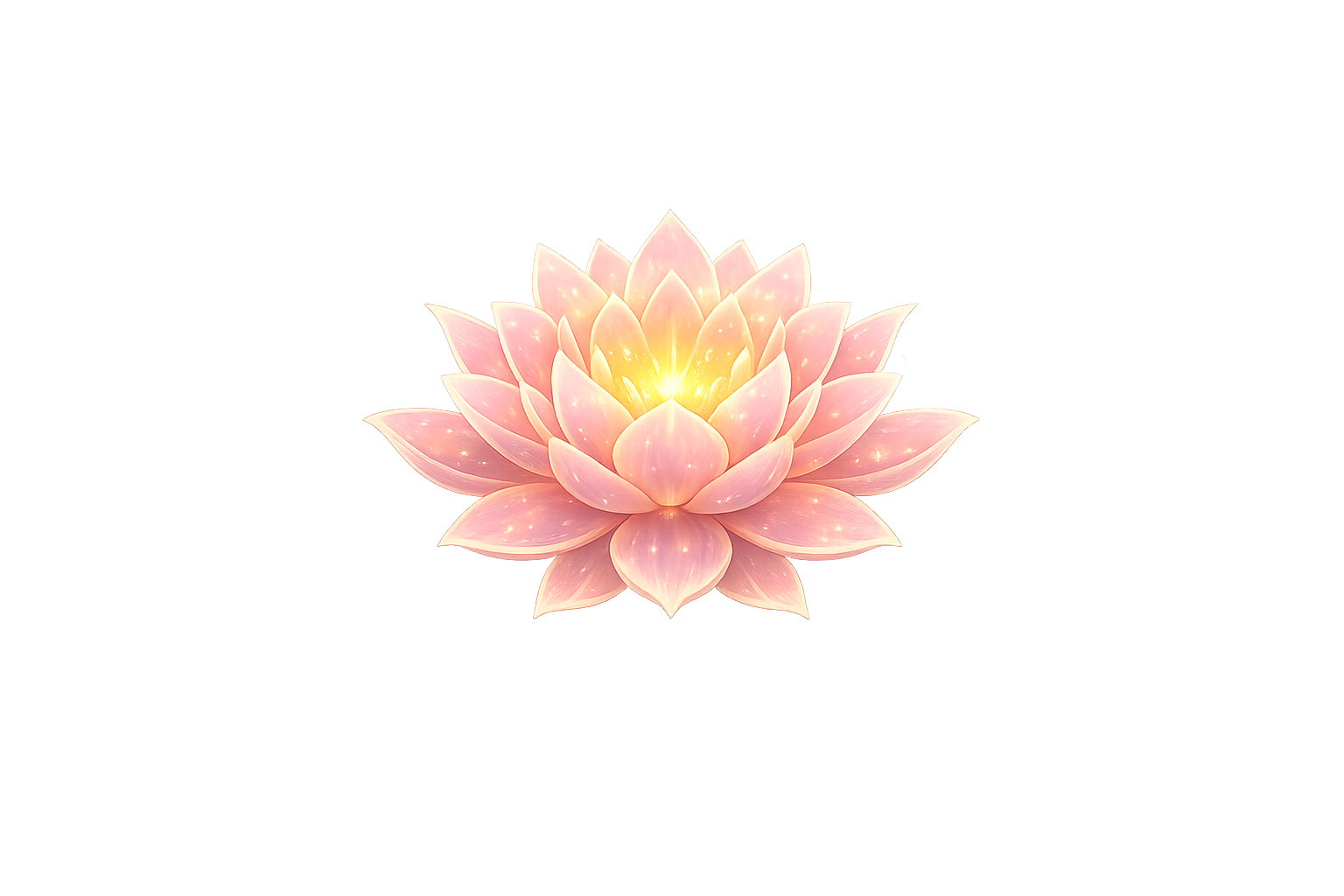
The lotus rises through the water, rooted in the depths of the muck.
Some see the lotus as a symbol of Divinity because of its ability to rise above and overcome the muck of life to blossom into the light.
While others see that the lotus grows from the mud, drawing nourishment from what is unseen, transforming density into beauty. Each petal opens toward the light, revealing a path of awakening that includes every layer of experience.
What if life were not something to transcend, but the exact path that leads to our awakening? In this view, the material world can be embraced as fuel for the path towards divinity.
There is wisdom in its unfolding, a reminder that all of life becomes part of the journey. Every challenge, every shadow, every moment of uncertainty contributes to the blossoming.
The lotus holds a quiet resilience, a devotion to growth that continues regardless of conditions.
It reflects the path of awakening as one of integration, where nothing is wasted, and everything becomes fuel for expansion.
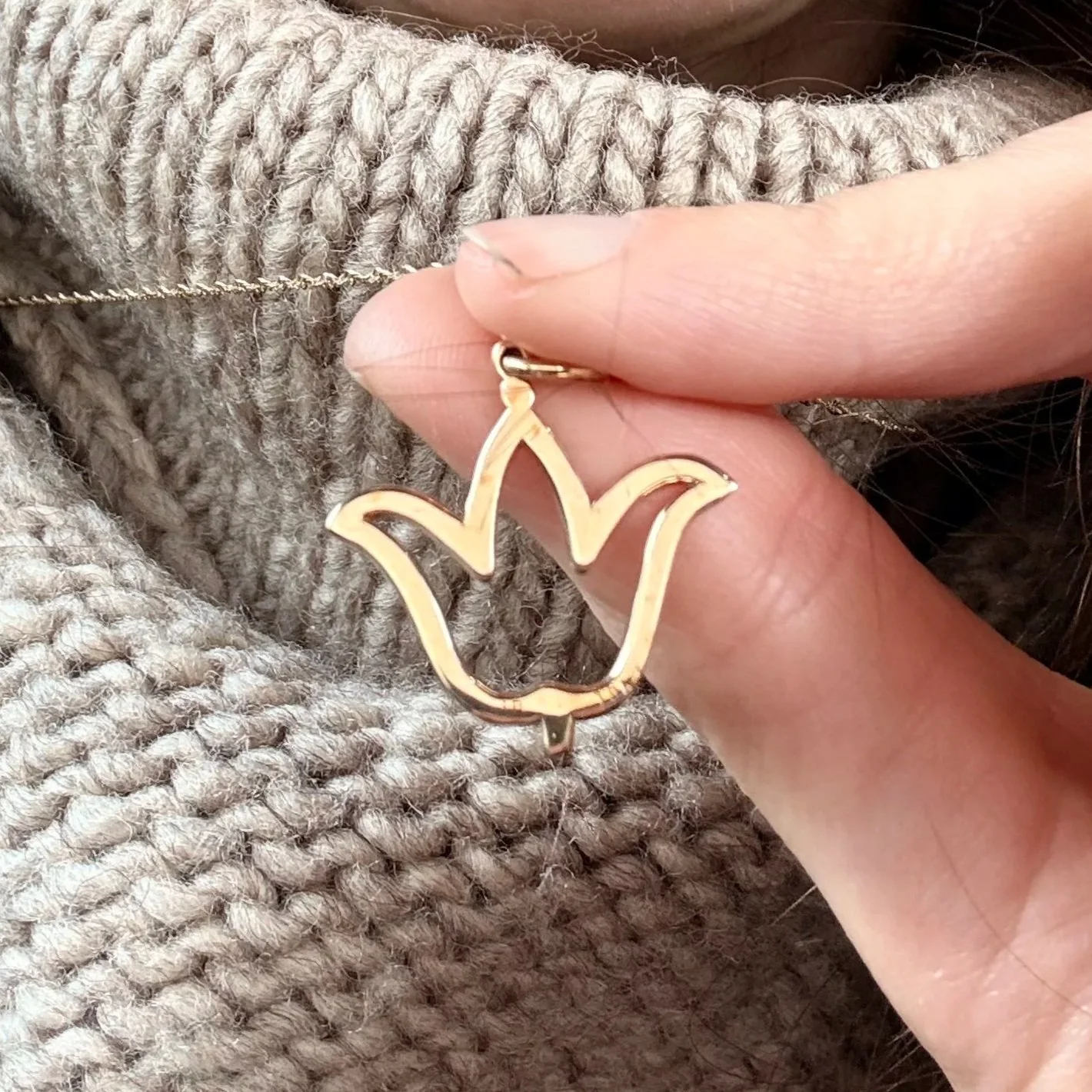
My golden lotus pendant, connected to the awakened soul Yogananda
The Pomegranate
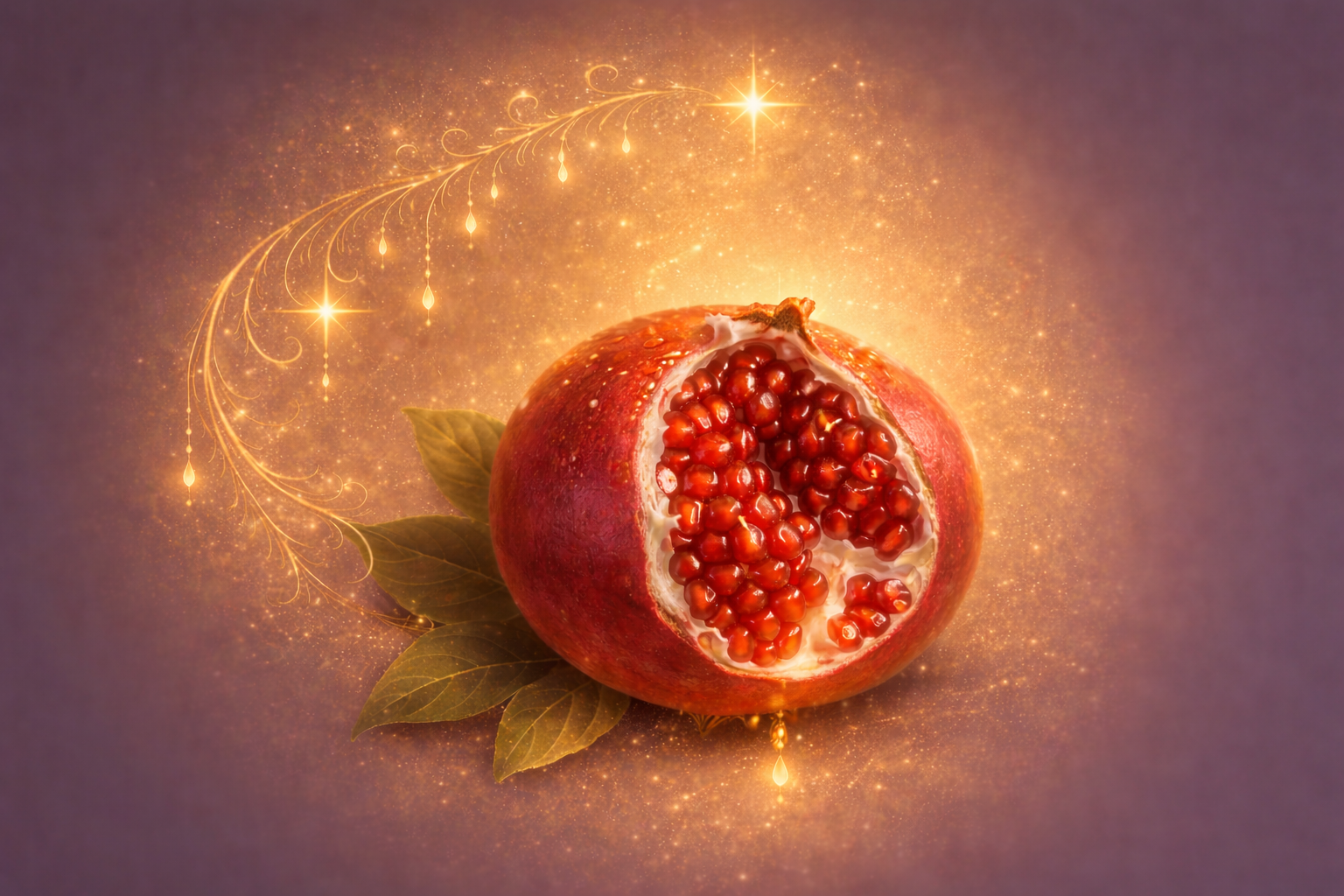
The pomegranate is a fruit of deep mystery and beauty, its outer skin holding within it hundreds of jewel-like seeds—each one glistening, alive, and full of potential. When opened, it reveals a hidden world: a rich, ruby interior that speaks to abundance and fertility. There is something both sensual and sacred in its form, its round, womb-like shape, its deep red color reminiscent of blood, creation, and the cycles of life.
Across ancient cultures, the pomegranate has been revered as a symbol of the sacred feminine. It embodies fertility, not only in the literal sense of reproduction, but in the creative life force that moves through all things. Each seed carries the essence of new life, making the fruit a powerful emblem of birth, regeneration, and the infinite potential held within the feminine body and spirit.
In mythology, the pomegranate often appears at thresholds—moments of transition, initiation, and descent. In Greek tradition, it is tied to Persephone, who eats the seeds in the underworld, binding her to a cyclical journey between worlds. This story reflects the feminine mysteries of death and rebirth, of moving between light and dark. The pomegranate becomes a symbol of initiation, of crossing into deeper layers of self, and emerging transformed.
Unlike fruits that offer themselves easily, the pomegranate asks to be opened with intention. It invites presence, patience, and a willingness to engage with what is hidden beneath the surface. In this way, it mirrors the feminine path: layered, intuitive, and rich with meaning.
In sacred traditions, the pomegranate has been associated with goddesses such as Inanna, Isis, Aphrodite, and Demeter, each representing different expressions of feminine power: love, fertility, death, rebirth, and wisdom. It is a fruit of the priestess, holding within it the codes of creation, the mysteries of the womb, and the cyclical nature of life.
The Flower of Life
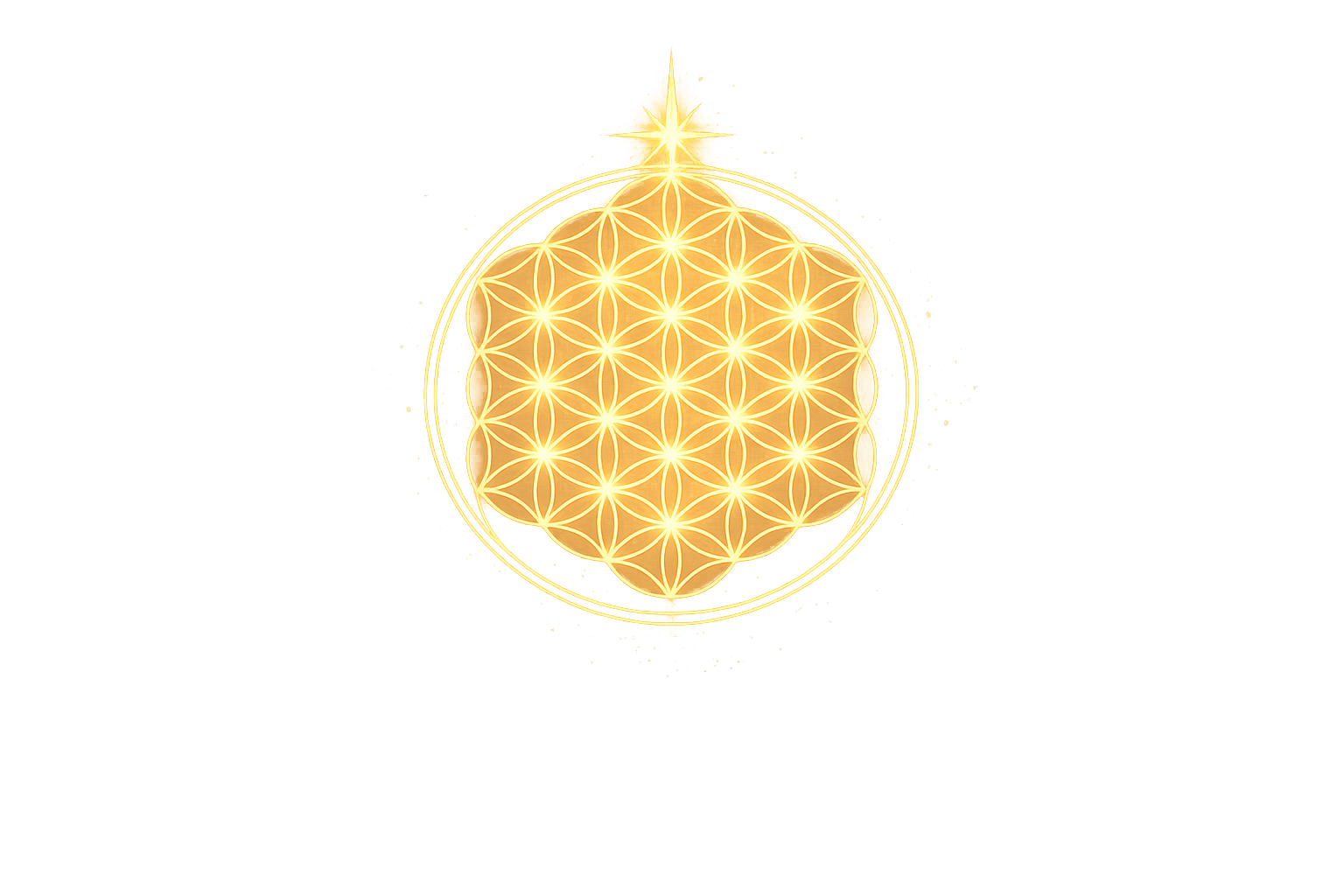
The flower of life carries the pattern of creation itself.
Interwoven circles form a sacred geometry that has appeared across cultures and time. It reflects the underlying structure of life, the interconnectedness of all things.
It is a geometric pattern found across many ancient cultures, including a well-known engraving in the Temple of Osiris at Abydos in Egypt. While its exact origin is unknown, the pattern itself emerges naturally from the repetition of circles, revealing a structure of harmony and interconnection. In spiritual traditions, it has come to represent the blueprint of creation, the unfolding of life from a single source into multiplicity.
There is a sense of infinite expansion within this symbol, a reminder that life moves in cycles, in patterns, in rhythms that extend beyond what can be seen.
It speaks to unity, to the coherence of existence, to the intelligence that organizes life into form.
Within it, there is a quiet knowing that everything is connected, everything belongs.
With love,
Meredith
If you’re Curious to Learn more About Walking a Sacred Feminine Path
Enter Your Details Below to Download the Program Guide